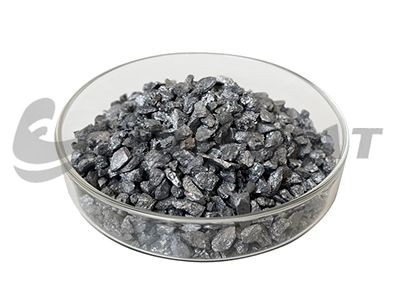


Top 5 Applications Of Molybdenum In Modern Industry
作者:kangbote 时间:2026-03-31 08:54:55
The rapid development of modern industry cannot be separated from the support of various special metal materials. Among them, molybdenum is a key material throughout high-end industrial manufacturing. This article will focus on the five core applications of molybdenum in modern industry.
What are the core characteristics of molybdenum?
The reason why molybdenum can adapt to various harsh industrial scenarios lies in its unique physical and chemical properties, which are the key advantages that distinguish it from ordinary metals.
Molybdenum is a chemical element with the symbol Mo and an atomic number of 42. With its extremely high melting point of 2623℃ (4753℉), high corrosion resistance, excellent structural strength, and good electrical and thermal conductivity, it becomes a necessary raw material in multiple core industrial fields.
Physical properties
Molybdenum is a silver-white hard metal with an extremely high melting point of 2623℃ (4753℉), a density of 10.28g/cm³, and excellent thermal and electrical conductivity. Its thermal expansion coefficient is highly compatible with glass.
Mechanical and chemical properties
The structural strength of molybdenum is extremely high, with outstanding corrosion resistance. It has excellent oxidation resistance in high-temperature environments. Combat can processed molybdenum into molybdenum powder, molybdenum wire, molybdenum sheet, and various molybdenum alloys according to industrial needs, adapting to different production scenarios.
These characteristics enable molybdenum to easily cope with industrial operation environments with high temperatures, high stress, high precision, and strong corrosion, making it an indispensable industrial metal raw material.
Application of molybdenum in the steel industry
In industrial production, molybdenum is mostly directly used in steelmaking or iron casting in the form of industrial molybdenum briquettes, and a small part is first smelted into molybdenum iron and then put into the steelmaking process.
Adding molybdenum to steel can effectively improve the hardness, wear resistance, high-temperature strength, and corrosion resistance of the steel, solving the problems of low strength of ordinary steel and easy deformation in extreme environments.
This type of molybdenum alloy steel is widely used in building steel structures, automotive parts, industrial mechanical components, corrosion-resistant stainless steel pipes, and high-speed cutting tools, etc.
Application of molybdenum in aerospace and defense industries
Molybdenum alloys are mainly used to manufacture rocket nozzles, with their high-temperature resistance and high strength characteristics ensuring the stable operation of core components of the rocket launch.
In the field of aircraft engines, molybdenum alloys are used to manufacture high-temperature components such as blades, turbine discs, and combustion chambers, and are also the core raw material for aerospace metal thermal barrier coatings, protecting high-temperature components and extending their service life.
In addition, molybdenum alloys are also used in satellite, spacecraft solar panels, propellers, attitude control systems, etc., balancing high strength and lightweight, perfectly adapting to space operation needs.

Application of molybdenum in the electronic and electrical industry
Molybdenum has good conductivity and high-temperature resistance, with a thermal expansion coefficient highly compatible with glass. This characteristic makes it an ideal material for electronic components.
Molybdenum is often used to make core accessories such as spiral filament cores, leads, and hooks in lighting equipment, electronic tubes, and spiral wires, ensuring the long-term stable operation of electronic components.
Molybdenum wire is also an ideal electrode wire for wire-cutting machines, capable of cutting various steels and hard alloys, with strong processing stability and effective improvement of mold processing accuracy, widely used in precision mold manufacturing and industrial cutting equipment production.
Application of Molybdenum in the Chemical Industry
Molybdenum and its compounds are multifunctional raw materials in the chemical field, with diverse application scenarios covering lubrication, catalysis, dyeing, flame retardancy, and many other specialized directions.
Dimethylsulfide is a high-performance lubricant, suitable for industrial equipment under high temperatures and heavy loads. Its lubrication effect is far superior to ordinary lubricants, significantly reducing equipment wear.
Oxide molybdenum, molybdate salts are core catalysts in petrochemical and chemical production, accelerating reaction efficiency; molybdenum yellow is used as a pigment in paint production, and molybdenum compounds can also be used to make flame retardants, smoke suppressants, and organic polymer corrosion inhibitors.
These products are widely used in industrial lubrication, petrochemical catalysis, paint processing, rubber and plastic additive production, and other fields.
Application of Molybdenum in Medical and Biomedical Engineering
Molybdenum has excellent biocompatibility. When implanted in the human body, it will not cause rejection reactions. At the same time, it has extremely strong wear resistance and corrosion resistance, fully meeting the strict safety and precision requirements of medical devices.
Molybdenum sheets and molybdenum alloys are used to manufacture high-precision medical instruments, surgical knives, and can also be made into bone implants (such as bone pins), dental implants, etc., adapting to various clinical medical needs, and helping to develop and produce high-end medical equipment.
Frequently Asked Questions about Molybdenum
1. In which fields is molybdenum mainly used?
Molybdenum is mainly used in five fields: steel manufacturing, aerospace, electronics and electrical engineering, chemical industry, and medical and biomedical engineering. Its core value relies on its excellent high-temperature resistance, high strength, and corrosion resistance.
2. What are the key physical properties of molybdenum?
The melting point of molybdenum is as high as 2623℃, with a high density, excellent thermal and electrical conductivity, and strong corrosion resistance and oxidation resistance. It is suitable for extreme industrial environments.
3. Does molybdenum have toxicity?
Molybdenum is a necessary trace element for the human body. A small amount of intake is harmless to the human body; however, inhaling or accidentally ingesting molybdenum dust can cause toxicity. Industrial production requires proper protection.
4. What are the common molybdenum-based industrial products?
Main molybdenum-based products include molybdenum alloys, dimethylsulfide lubricants, oxide molybdate catalysts, and molybdenum iron for steelmaking, covering various industrial production links.
Combat: Specialized Manufacturer of Molybdenum Metal Materials
Combat is a specialized manufacturer based in China with deep expertise in the field of molybdenum metals. We possess comprehensive, full-chain production capabilities—ranging from the smelting of high-purity molybdenum powder and forming/sintering processes to precision deep processing.
Core Manufacturing Capabilities
Equipped with specialized molybdenum metal production machinery—including high-temperature vacuum sintering furnaces, cold/hot isostatic pressing equipment, and precision CNC machine equipments—our molybdenum manufacturing processes are highly stable and reliable. We provide various industries with molybdenum metal products characterized by three core advantages: high purity, high precision, and high density.
Key Molybdenum Product Series and Core Specifications
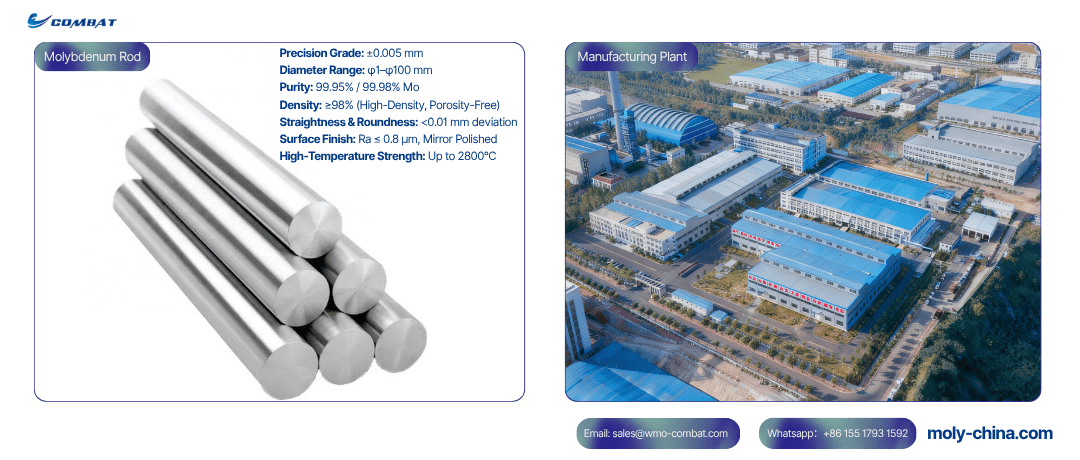
Molybdenum Rods: Purity Mo ≥ 99.95%–99.98%; Diameter φ1mm–φ200mm; Length customizable upon request; Standard dimensional tolerance ±0.01mm (Precision Grade: ±0.005mm); Density ≥ 98%. Surfaces can undergo turning or polishing treatments. Suitable for applications such as electrodes, high-temperature furnaces, and precision machinery.
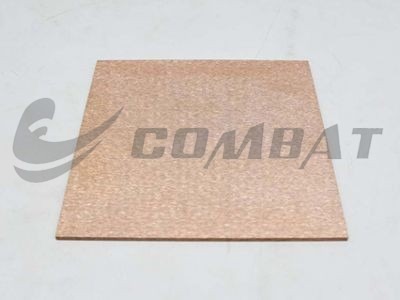
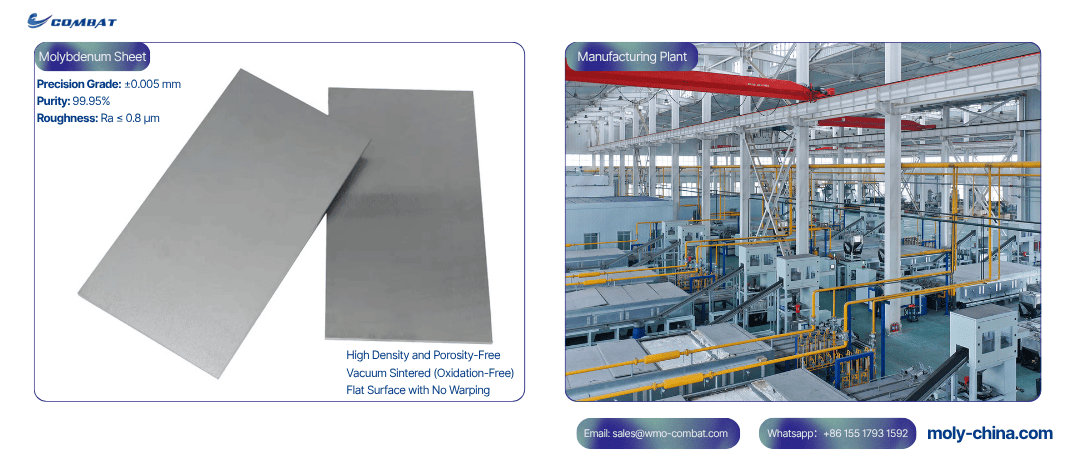
Molybdenum Plates/Sheets: Thickness 0.1mm–50mm; Width and length cut to specific requirements; Features high flatness and is free of surface oxide layers. High-purity grades can reach 99.98% purity. Possesses excellent high-temperature resistance and corrosion resistance. Widely used in fields such as medical devices, thermal barrier coatings, and electronic components.
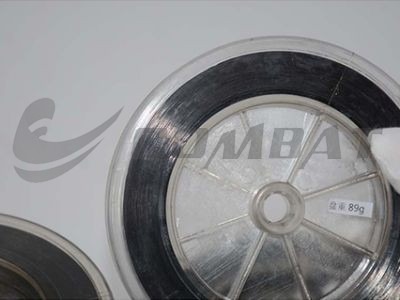
Molybdenum Wire/Electrode Wire: Comprehensive coverage of fine-diameter specifications; Features high straightness and a smooth, burr-free surface; Exhibits stable electrical and thermal conductivity. Ideal for high-precision applications such as wire cutting, electronic filaments, and precision electrodes.
Molybdenum Alloy Products: High-performance alloy products, such as TZM molybdenum alloy. Characterized by precise compositional ratios, these molybdenum alloys offer superior high-temperature strength and creep resistance compared to pure molybdenum. Specifically customized for industries such as aerospace.
Conclusion: The Future Prospects of Molybdenum
In the future, with the continuous development of aerospace, new energy, and high-end medical industries, the market demand for molybdenum will steadily increase.
If you need more information about molybdenum-based industrial products, molybdenum alloys, performance parameters, customized processing plans, or industry application details, please consult and communicate with Combat. Let's jointly explore more possible applications of molybdenum metal in the industrial field.