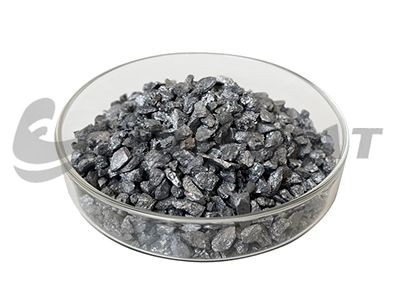


Tungsten Heavy Alloy for Medical Radiation Shielding
作者:kangbote 时间:2026-09-24 18:31:06
Tungsten Heavy Alloy with the comprehensive advantages of high density, high shielding efficiency, non-toxic and harmless, excellent mechanical properties, and precision machining, it has become the core material of modern high-end medical radiation shielding, and is widely used in core fields such as imaging diagnosis, nuclear medicine, and radiotherapy.
What Is Tungsten Heavy Alloy?
tungsten alloys, also known as high-density tungsten alloys or tungsten alloys, are the two-phase composite sintered materials. Its main component is 90%-98% of high-purity tungsten, with nickel-iron, nickel-copper and other tough binding phase, through the powder metallurgy process composite molding. Pure tungsten has a very high density and radiation attenuation ability, but the texture is very brittle, difficult to process, high molding cost, can not directly make precision medical accessories. tungsten heavy alloy through the introduction of flexible bonding matrix, perfect to make up for the application of pure tungsten short board. On the basis of retaining the ultra-high density and excellent radiation shielding performance of pure tungsten, tungsten coincident gold greatly improves the toughness, ductility and processability of the material, while reducing the molding temperature and adapting to large-scale precision production.
At the industry standard level, commercial medical grade tungsten heavy alloys strictly follow ASTM B777, AMS 7725, and other international specifications. According to the different tungsten content, it can be divided into four mainstream grades: 90%, 92.5, 95% and 97%, which are suitable for the performance requirements of different medical shielding scenarios.
W-Ni-Fe and W-Ni-Cu Tungsten Heavy Alloy
At present, the tungsten heavy alloy in the field of medical shielding is mainly divided into two systems, nickel-iron tungsten alloy and nickel-copper tungsten alloy, the performance difference between the two is obvious, suitable for different medical scenarios.
W-Ni-Fe (tungsten-nickel-iron alloy) is the most widely used general-purpose model. The mainstream ratio includes 90W-7Ni-3Fe, 92.5W-5.25 Ni-2.25Fe, 95W-3.5Ni-1.5Fe and other specifications. The biggest advantage of its material is high strength, high toughness, excellent impact resistance, through rotary forging, rolling, heat treatment to further strengthen the mechanical properties. W-Ni-Cu (tungsten-nickel-copper alloy) non-magnetic properties, the perfect fit for magnetic field sensitive medical equipment. The common ratio is 90W-6Ni-4Cu, 95W-3.5Ni-1.5Cu, which is non-magnetic, corrosion-resistant, and has better thermal conductivity. W-Ni-Cu (tungsten-nickel-copper alloy) is the exclusive shielding material for MRI-compatible equipment and precision nuclear medicine instruments.
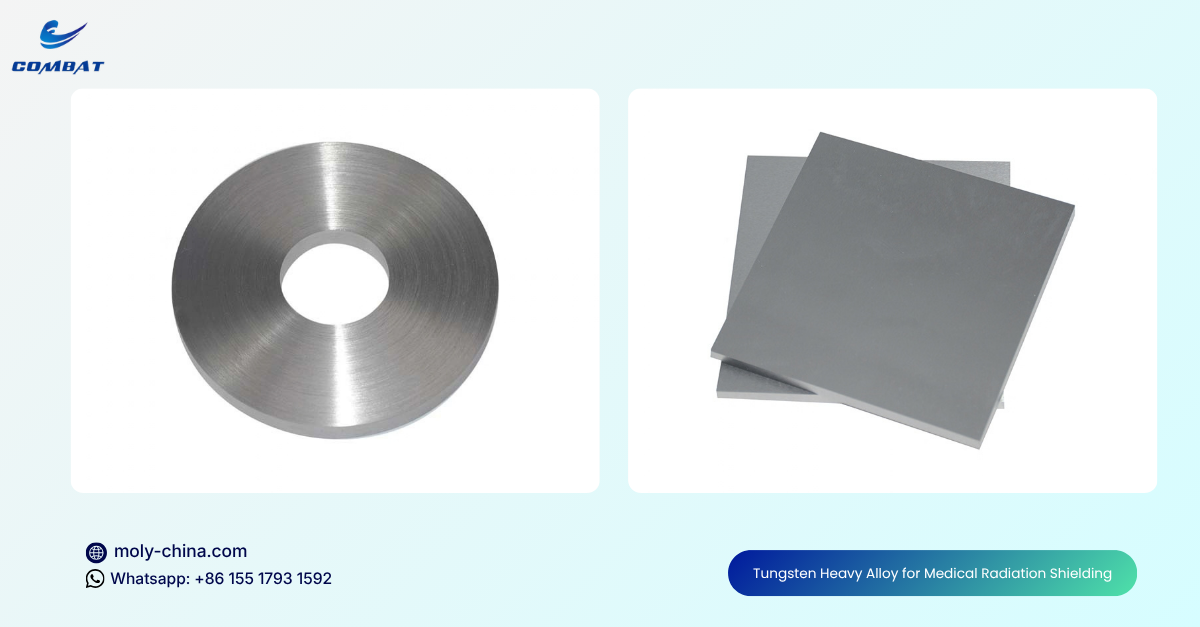
Advantages of Tungsten Alloys for Medical Radiation Shielding
Ultra high density
The core principle of radiation shielding is to intercept photon radiation such as X-rays and γ-rays by relying on high material density and high atomic number. The higher the density of the material, the greater the number of electrons and atoms per unit volume, and the higher the probability of collision and absorption of radiation photons.
The density of lead material is only 11.3g/cm³, while the density of medical grade tungsten heavy alloy can reach 17.0-18.5g/cm³, and the density advantage is extremely obvious. Under the same radiation attenuation effect, the thickness of the tungsten alloy shield can be reduced by 30%-40% compared with the lead material, and the volume is only 60%-65% of the lead material.
High atomic number
Tungsten has an atomic number of Z = 74, and has a strong photoelectric absorption effect for 20-150keV diagnostic X-rays commonly used in medical scenarios, which can efficiently attenuate scattered rays. Although lead has a slightly higher atomic number Z = 82, the ultra-high density of the tungsten alloy completely fills 1 gap.
In the vast majority of medical radiation energy range, the linear attenuation performance of tungsten heavy alloy is better than that of lead material, and the thin structure can achieve a purer beam current, effectively improving the accuracy of medical imaging.
Stable mechanical properties
The tungsten heavy alloy has high strength, high hardness and strong dimensional stability. The material has excellent anti-sag, anti-deformation and anti-vibration capabilities, no additional protective coating, no coating shedding, pollution and bacteria accumulation, and its service life is much longer than that of lead accessories.
Can be precision machining
Pure tungsten brittleness, easy to crack, unable to process thin-walled, microporous, complex curved surface structure. tungsten heavy alloys can be processed with high precision by conventional carbide tools and CNC equipment, and the tolerance can be controlled within ± 0.01-0.025mm. It can process complex structures such as thin-walled grille, multi-leaf collimator, microporous collimating aperture, and special-shaped shielding shell.
At the same time, combined with powder metallurgy near-net molding and 3D printing technology, various non-standard precision shielding accessories can be customized to perfectly adapt to the personalized design requirements of high-end medical equipment.
Greater safety compliance and hygiene
tungsten heavy alloys are non-toxic and non-radioactive, completely avoiding compliance risks such as occupational exposure, environmental pollution and waste disposal of lead materials. There are no special control requirements for medical staff operation, equipment daily operation and maintenance, and parts disposal.
The surface of the material is dense and smooth, no pores, not easy to accumulate dust, can be repeatedly cleaned, high temperature disinfection, fully meet the hospital sterile, clean clinical use standards.
Application Of Tungsten Heavy Alloy In Medical Field
X-ray Imaging Equipment Shielding
In conventional X-ray, DR, CR and other diagnostic equipment, tungsten heavy alloys are used for core components such as beam limit collimators, anti-scatter grids, and equipment shielding housings. Its high shielding efficiency can effectively filter the excess scattered rays under the light and thin structure, and accurately shape the X-ray beam. It can not only improve the contrast and clarity of medical images, but also reduce the ineffective radiation exposure of patients and medical staff.
CT Scanner System Shielding
The tungsten heavy alloy used in CT equipment is mainly used for the front and rear collimators of the patient, the anti-scatter grid of the detector array, and the internal shielding components of the equipment.
Precision tungsten alloy accessories can accurately control the thickness of CT slices, suppress stray ray interference, and greatly improve spatial resolution and imaging contrast. Non-magnetic W-Ni-Cu alloys are used in MRI equipment to avoid magnetic field interference. At the same time, the tungsten heavy alloy material has high strength characteristics, which can be adapted to the vibration condition of CT frame rotating at high speed, and the long-term operation is not deformed and the precision is not attenuated.
Precision Shielding of Radiotherapy Equipment
In the linear accelerator, gamma knife, IMRT intensity modulated radiotherapy, stereotactic radiotherapy equipment, tungsten heavy alloy is the core manufacturing material of multi-leaf collimator (MLC).
Dozens to hundreds of tungsten alloy blades can be independently moved by computer to accurately fit the tumor contour and shape the high-energy ray beam. Maximize the treatment dose, reduce the radiation damage of the surrounding healthy tissue, reduce the penumbra area, and improve the accuracy of radiotherapy.
In addition, high-density tungsten alloys are used for radiotherapy head shielding, Co-60 radioactive source containers, beam current blockers, secondary collimators and other components. High-tungsten content models can maximize the shielding effect of high-energy therapeutic rays.
Nuclear Medicine and PET/SPECT Device Shielding
The nuclear medicine scene requires frequent exposure to radioactive drugs such as fluorine 18, technetium 99m, iodine 131, etc., and medical staff are extremely vulnerable to cumulative damage from limb radiation.
tungsten heavy alloy can be made into syringe shielding cover, medicine bottle protective tank, isotope generator, radioactive drug transport shielding container. Lightweight and portable structure reduces the burden of medical operations, while effectively reducing limb radiation dose.
In PET, SPECT, and gamma camera equipment, tungsten alloy shielding grids and spacers can absorb off-axis scattering lines, improve the signal-to-noise ratio of the detector, and improve the accuracy of nuclear medicine imaging from the source.
Medical Detectors and Precision Collimation Components
Detectors and collimation systems of various types of medical imaging equipment are the core of determining imaging quality. tungsten heavy alloys can be processed into parallel holes, pinholes, coded apertures and other types of precision collimators.
The highly dense tungsten alloy structure can effectively suppress the radiation penetration leakage and avoid imaging artifacts and blurring. The thin-walled, high-precision custom structure meets the demanding requirements of high-resolution medical imaging.
Types of Tungsten Alloys Component for Medical Radiation Shielding
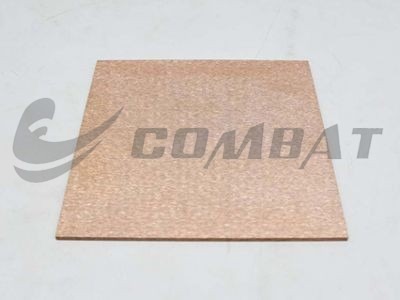
Tungsten alloy plate/block
High-density tungsten alloy plates and blocks are the most basic blank forms for medical shielding. They are made by pressing, sintering and rolling processes, and the thickness covers ultra-thin foils from 0.1mm to several centimeters thick blocks.
Tungsten alloy medical shielding plate is used for radiotherapy multi-leaf collimator blades, CT anti-scattering plate, equipment cavity shielding wall plate, radioactive source storage protection block and other scenes. The material has good dimensional stability and can process high-precision plane and contour structures to ensure the accuracy of beam control.
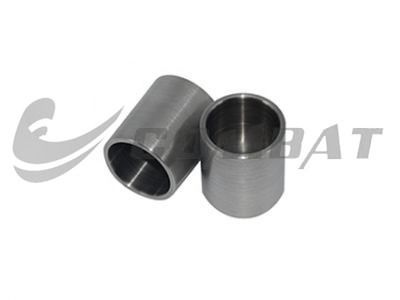
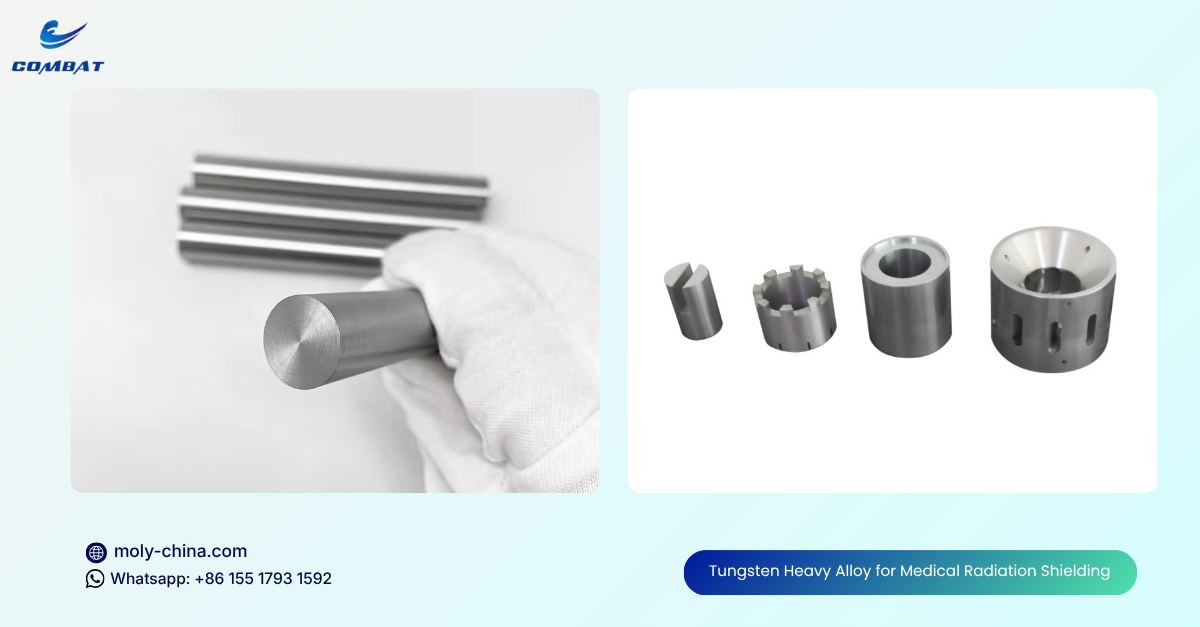
Tungsten Alloy Rod/Tube
High-density tungsten alloy rods and tubes have uniform circumferential shielding characteristics and are suitable for rotary symmetry protective accessories. Through the rotary forging process to enhance the structural strength, the inner wall can be processed taper, thread and other precision structures.
Commonly used to make syringe protective barrel, isotope medicine bottle protective sleeve, collimator lining aperture, dose calibrator protective sleeve and other medical accessories. The non-magnetic nickel-copper material can be directly used in the scene of nuclear magnetic resonance compatible equipment.
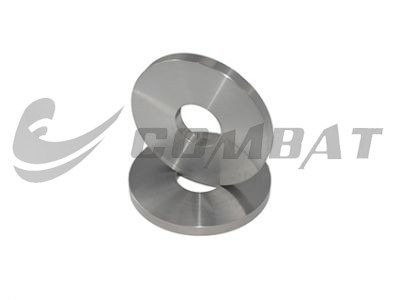
Customized Precision Tungsten Shielding Components
To meet the needs of non-standardization and high precision of medical equipment, tungsten heavy alloy manufacturers can produce complex special-shaped shielding parts based on tungsten alloy blanks through CNC precision cutting, laser sintering 3D printing and other processes.
Covers integrated multi-leaf collimator components, multi-dimensional dot matrix collimation grid, special-shaped detector shielding housing, special protection with inner cavity channel, etc. All tungsten heavy alloys can achieve medical-grade surface finish and ultra-high tolerance accuracy to meet the needs of aseptic assembly and long-term stable operation.
How To Manufacture Medical Grade Tungsten Alloy Shield?
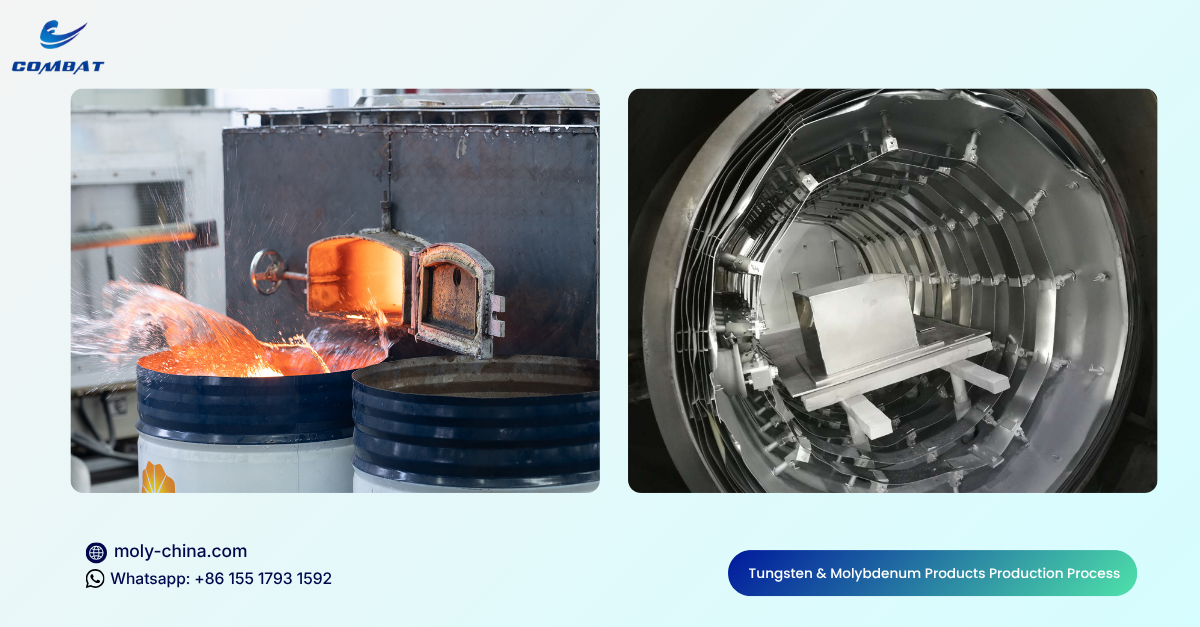
Medical radiation shielding tungsten alloy parts are almost all produced by powder metallurgy liquid phase sintering process. The whole process has controllable precision and high stability, and can produce high-performance medical grade tungsten heavy alloy with no pores and high density in batch.
- Raw material ratio and powder mixing. High purity tungsten powder and nickel iron, nickel copper bonding powder, according to 90%-97% tungsten content accurate ratio. Through ball milling and V-type mixing equipment in inert atmosphere, the impurity and oxygen content are strictly controlled to ensure the uniformity of the material after sintering.
- Press forming.According to the structure of tungsten heavy alloy, different pressing processes are selected, and simple plates, blocks and bars are pressed in one direction. Large size, high uniformity requirements of the parts using cold isostatic pressing process. Powder injection molding can be used to prepare near-net forming blanks for complex thin-walled structures.
- Degreasing and pre-sintering.For injection-molded blanks with organic binders, the bonding components are first removed by solvent extraction and high-temperature thermal burning. After 1000-1300 ℃ solid pre-sintering, improve the strength of the blank, remove the surface oxide layer, convenient for subsequent transfer processing.
- Core liquid phase sintering. The billet is placed in a hydrogen or vacuum environment and heated to 1450-1550°C to melt the binder phase while the tungsten particles remain solid. The melt bonding phase infiltrates the tungsten particles, eliminates the internal pores through capillary action, and reprecipitates with the dissolution of tungsten to form a stable microstructure with spherical tungsten particles inlaid, and the density of the finished product can reach more than 99% of the theoretical density.
- Finishing after sintering.According to the tungsten heavy alloy, the strengthening processes such as rotary forging, rolling and heat treatment are carried out to improve the mechanical properties of the material. Then through CNC milling, turning, grinding, polishing, processing to medical-grade precision size and surface finish, and finally do clean processing, to meet the medical sterile requirements.
- Full dimensional quality detection. Through the Archimedes method to detect density, metallographic testing of microstructure, mechanical testing of strength and hardness, three-coordinate testing of dimensional tolerances, with non-destructive testing of internal defects to ensure that tungsten heavy alloy fully meets the ASTM B777 medical grade standard.
Medical tungsten alloy shield core quality control parameters
The performance stability of medical radiation shielding parts is directly related to the imaging accuracy and clinical safety of the equipment, and the production process needs to strictly control the eight core parameters.
The density of tungsten alloy is the core index to determine the shielding efficiency, and it must be stable to meet the standard to avoid radiation leakage caused by insufficient local shielding. The tungsten content directly affects the density, strength and attenuation performance of the material, which needs to be strictly matched to the requirements of the equipment working conditions. Hardness and tensile strength determine the wear resistance and deformation resistance of the parts, and ensure the long-term operation accuracy of the equipment. Dimensional tolerance controls assembly fit and beam shaping accuracy, which is the core quality control point of high-end medical equipment. The surface finish affects the cleanliness and disinfection effect of the equipment to avoid fouling and bacteria. There is no pore or crack defect inside, which can prevent local radiation penetration and ensure the uniformity of shielding. The stability of chemical composition ensures that the bulk tungsten heavy alloy has uniform performance and no quality fluctuation.
| Parameter | Why It Matters |
|---|---|
| Density | Affects shielding performance |
| Tungsten content | Influences material characteristics |
| Hardness | Mechanical durability |
| Tensile strength | Structural reliability |
| Dimensional tolerance | Assembly accuracy |
| Surface finish | Component integration |
| Internal defects | Component reliability |
| Chemical composition | Material consistency |
FAQ About Tungsten Heavy Alloy
Q1: Why are tungsten heavy alloys suitable for X-ray shielding?
tungsten heavy alloys have two core characteristics of high atomic number and ultra-high density, and can efficiently absorb X-rays and gamma rays through photoelectric effect and Compton scattering. Under the same shielding effect, the thickness is much smaller than that of lead material, and it is non-toxic, high strength, and can be precisely processed. It is an ideal material for medical X-ray shielding.
Q2: What is the density standard of tungsten alloy commonly used in medical shielding?
Medical commercial mainstream density is 17.0-18.5g/cm³, corresponding to ASTM B777 four grades. High tungsten content model density is higher, shielding performance is stronger, suitable for high-end radiotherapy, precision imaging equipment lightweight high-precision shielding needs.
Q3: Can tungsten alloys be used in the manufacture of medical X-ray equipment?
You can. tungsten heavy alloy is the core shielding material of modern X-ray and CT equipment, which can be used to make core accessories such as collimator, anti-scatter grid and shielding shell. Magnetic system and non-magnetic system materials can be adapted to different types of medical equipment.
Q4: Can tungsten alloys be processed into high-precision medical collimators?
Totally. Tungsten alloy can be through CNC precision machining, 3D printing process, the production of multi-leaf collimator, pinhole collimator, parallel hole collimator and other types of complex structures,
Q5: What is the difference between tungsten superposition gold and pure tungsten shielding material?
The density of pure tungsten is slightly higher, but it is extremely brittle, difficult to process, easy to crack, and cannot make precision medical parts. tungsten heavy alloys retain the high shielding performance of pure tungsten, while greatly improving toughness and processability, lower molding costs, more stable structure, more suitable for clinical medical equipment applications.
Conclusion
As the core material of the new generation of medical radiation shielding, tungsten heavy alloy is accelerating the replacement of traditional materials, becoming the key support for the upgrading of high-end medical imaging and radiotherapy equipment, providing a solid guarantee for clinical diagnosis and treatment safety and equipment accuracy. For medical equipment manufacturers, the most effective approach is to specify the shielding component according to the actual radiation environment, equipment geometry and mechanical requirements rather than selecting a material based on density alone.
Contact our engineering team today to discuss custom tungsten heavy alloy radiation shielding components tailored for your medical device projects. Get precise material data and quotation upon request.