

What is Tungsten Wire Mainly Used For?
作者:kangbote 时间:2026-03-27 09:48:06
Tungsten wire is a very vital component of various industries that involve high-temperature metal materials. Due to tungsten wire melting point of 3422°C, it is very useful in various sectors such as lighting, electronics, medical equipment, and semiconductor industries.
Knowing the main use of tungsten wire is very vital in helping industries select materials for use in harsh working environments.
What Is Tungsten Wire and Why Is It Widely Used
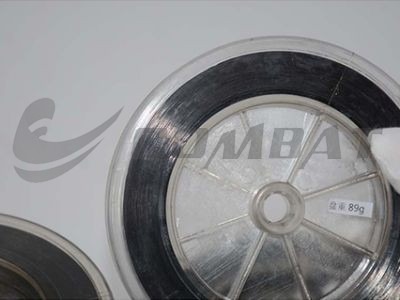
Tungsten wires are precision metal products made from high-purity tungsten raw materials, with a standard composition consisting of a tungsten content of more than 99.95%. It has the fundamental physical properties of tungsten, such as the highest melting point of any metal, 3422°C, high-temperature stability, low vapor pressure, high tensile strength, and high stability in dimensions.
These properties cannot be replaced by any other metal materials, and the tungsten wires are the key parts in lighting, electronics, medical treatment, high-temperature industry, new energy, and advanced scientific research.
It can be made into pure tungsten wires, doped non-sag tungsten wires, clean wires, and gold-plated wires according to the requirements of working conditions, ranging from 4 microns to hundreds of microns in diameter.
Tungsten Wire in Lighting Applications
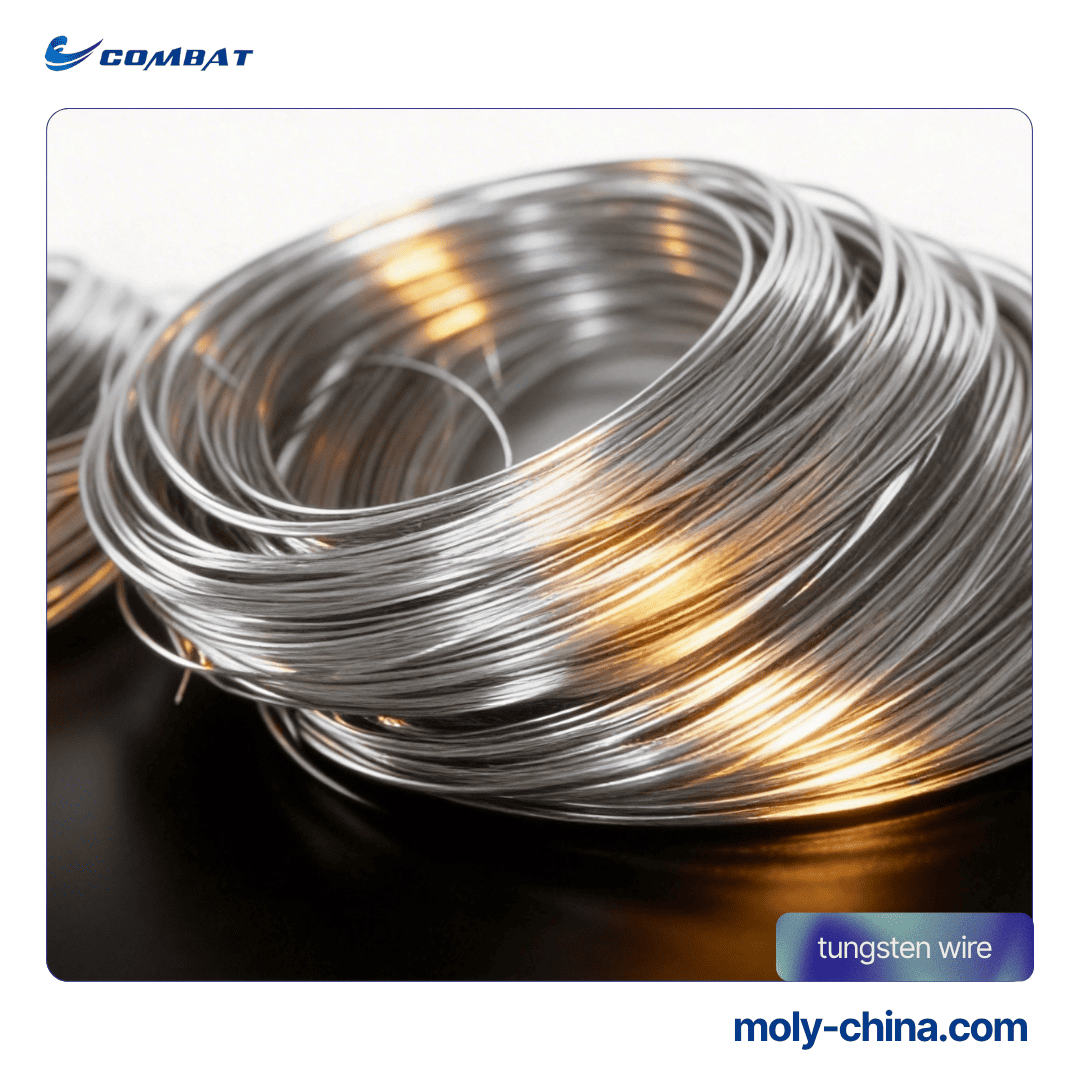
The first and most representative application field of tungsten wire is lighting. The doped tungsten wire with potassium, silicon, and aluminum has good anti-sag properties and can maintain the shape stability at high operating temperatures.
Tungsten wire is mainly used in incandescent lamps, halogen lamps, and iodine tungsten lamps. Although LED lights have replaced traditional household light bulbs, tungsten wire has its irreplaceable application fields in automobile lights, stage lights, stadium lights, and special lamps with high color temperatures. These lights need stable light outputs, high temperature resistance, and stable color temperatures, which can be achieved by tungsten wire alone.
Tungsten Wire in Electronics and Semiconductor Manufacturing
In the electronics and semiconductor field, tungsten wire plays an important role in the development of precise and reliable products. Tungsten wire is utilized as cathodes, anodes, and heating elements in vacuum electronic devices like traveling wave tubes, magnetrons, and klystrons, which are essential for delivering high-frequency and high-power signals in communication systems, radars, and satellites.
In the production of semiconductor chips, high-purity wire is utilized for micro-scale wiring and interconnection of semiconductor chips and packaging, as well as for wafer test probes. Tungsten wire is utilized in the production of gold-plated wire for electrodes in copiers and air purifiers through corona discharge ionization and modification.
Tungsten Wire for High-Temperature Industrial Heating
Tungsten wire has its own advantages in the field of ultra high temperature industrial heating. It can be stable in working environment with temperature of 1500°C~2200°C, on a higher road than the heat resistance of nickel-chromium alloy and molybdenum wire.
Tungsten wire is also used in metal injection molding furnaces, vacuum metallizing furnaces and glass processing high temperature furnaces as a heating element and as the support components. Its low vapor pressure ensures it will not contaminate the furnace atmosphere and products, and its good creep resistance ensures it will not deform and sag under long-term high-temperature working conditions. Tungsten wire doped with certain elements can be used as high-temperature springs for instruments and valves, maintaining its elasticity under baking and high-temperature working conditions.
Tungsten Wire Applications in Medical Devices
The medical field has ever-increasing demands for tungsten wires, depending on their high density, high strength, and radiation resistance. Ultrafine tungsten wires are the main material for the cables of surgical robots, with nearly zero elongation, enabling accurate transmission and position control, and assisting in the accomplishment of minimally invasive surgeries by doctors with high accuracy.
Tungsten wires are used to manufacture high-frequency electrosurgical electrodes, enabling precise cutting and hemostasis, minimizing damage to tissues, and being applicable in neurosurgeries and ophthalmologies. They are also used in X-ray tube targets, scanning electron microscopes' electron emission sources, catheter shafts, and guide wires, providing imaging assistance and structural support in medical practices.
Tungsten Wire in Renewable Energy and Photovoltaic Manufacturing
The new energy industry is becoming a new growth point for the demand for tungsten wire. In the production of photovoltaic silicon wafers, tungsten wire replaces carbon steel wire as the busbar of diamond wire for cutting efficiency, yield, and cost savings.
Tungsten-copper composite materials made from tungsten wire are used as current collectors for lithium battery production, which improves battery conductivity and cycling stability. It is also used in high-temperature applications such as crystal pulling and diffusion doping in photovoltaic production for stable heating and structural support in solar cell production.
Tungsten Wire in Scientific Research and Advanced Technology
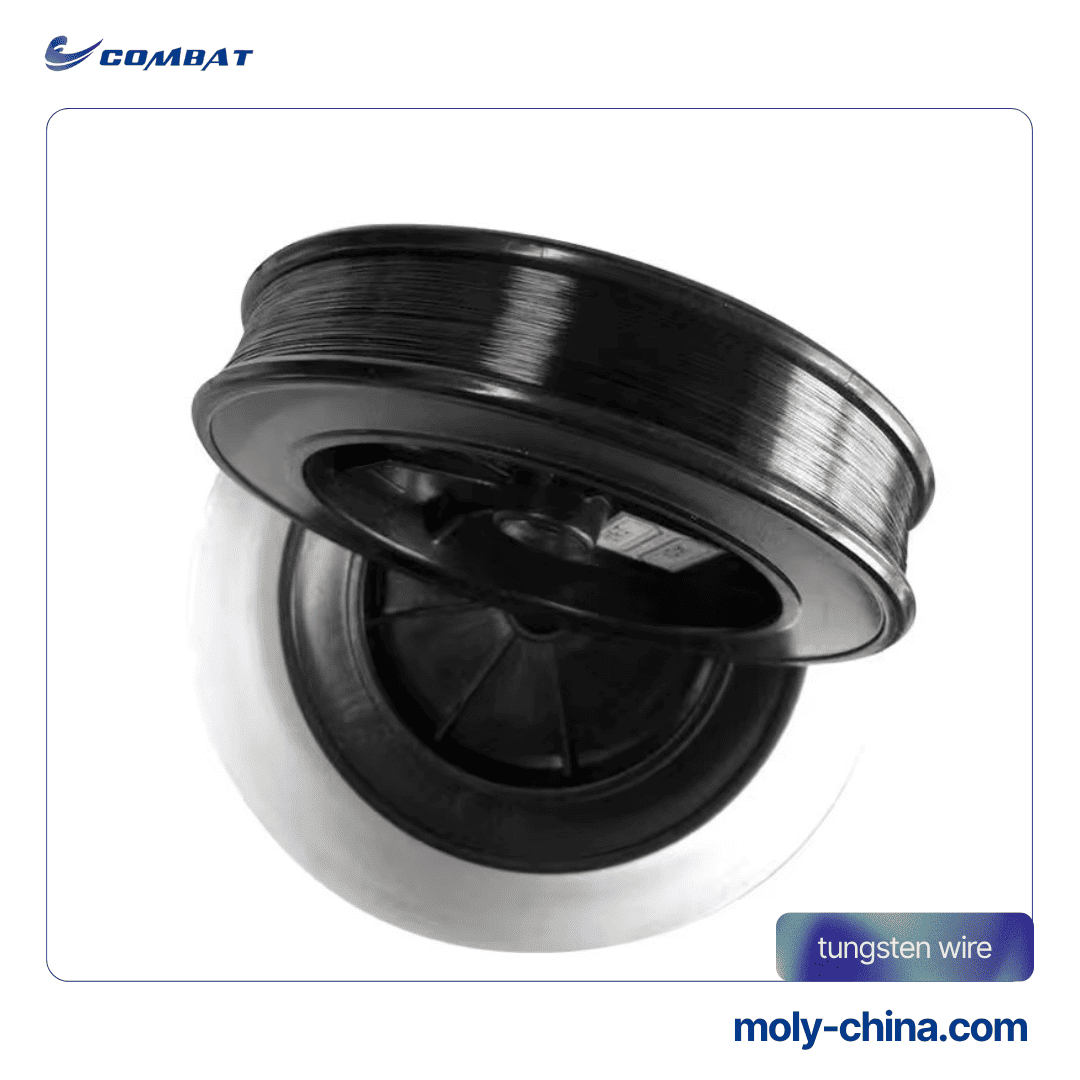
Tungsten wires are an essential primary material in frontier scientific studies and high-end technology development. It is employed in particle detectors, wire chambers, and terahertz grid polarizers to support fundamental scientific investigations in physics and the material sciences.
In satellite deployable antennas, high frequency (HF) signal wires and thermal sensors, wire incorporators in satellite deployable antennas and thermal sensors, high frequency signal wires and thermal sensors, solid-state switches, etc., where the material meets extreme environmental requirements such as vacuum and temperature gradients, W wire conductors comes the closest. It also finds application in TIG welding electrodes, EDM cutting wires and precision instruments like borescopes, microscopes etc assuring steady output in precision fabrication and detection.
Key Advantages That Make Tungsten Wire Irreplaceable
Ultra-high melting point and thermal stability: It has the ability to maintain its physical and chemical stability at temperatures above 1600°C, which is suitable for extreme high-temperature applications.
Low vapor pressure and low coefficient of thermal expansion: It can prevent high-temperature evaporation losses and provide dimensional stability for its components.
High strength and rigidity: It can maintain high tensile strength in small diameters, meeting the requirements for miniature precision parts.
Excellent electrical and thermal conductivity: It can balance its conductivity and high-temperature resistance for adapting to different applications.
Good processability: It can be drawn into ultrafine wire, doped, cleaned, and plated for different industrial requirements.
Growing Demand for Tungsten Wire in High-Tech Industries
The demand for tungsten wire is transferring from traditional lighting to other high-tech fields. It presents a steady growth trend. The development of surgical robots, semiconductor advanced packaging technology, and the photovoltaic industry will promote the steady increase in the demand for high-purity and ultrafine tungsten wire.
The demand for high-purity, ultrafine, and surface-modified products will be the focus in the tungsten wire market. Gold-plated and cleaned products will be more popular in the fields of high-end electronics and medical treatment. Meanwhile, the technological progress in powder metallurgy and drawing processing will improve the performance and reduce the production cost of the products. Tungsten wire will play a more important role in the fields of aerospace, new energy, and quantum computing.
Conclusion
Tungsten wire is generally used in various industries due to its high heat resistance, strength, and electrical properties. However, with the rapid changes in technology in sectors such as semiconductors, renewable energy, and medical equipment, it is expected that the use of high-grade tungsten wire will continue to increase in the near future.