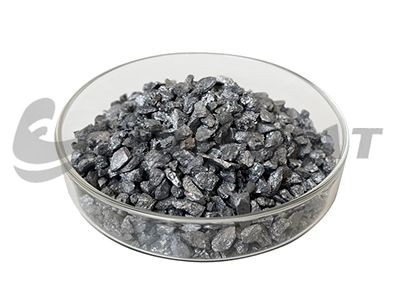


Why Is Tungsten Heavy Alloy Used for Radiation Shielding? Grades, Benefits and Applications
作者:kangbote 时间:2026-08-06 10:58:01
In the fields of medical imaging, tumor radiotherapy, nuclear power operation and maintenance, industrial non-destructive testing, etc., the performance of radiation shielding materials directly determines the accuracy of equipment, personnel safety and operational compliance. With the tightening of global environmental protection policies and the upgrading of medical and nuclear power equipment, tungsten heavy alloy has become the core preferred material in the field of advanced radiation shielding due to its ultra-high shielding efficiency, safety and environmental protection, and excellent mechanical properties.
What is Tungsten Heavy Alloy? Core Features
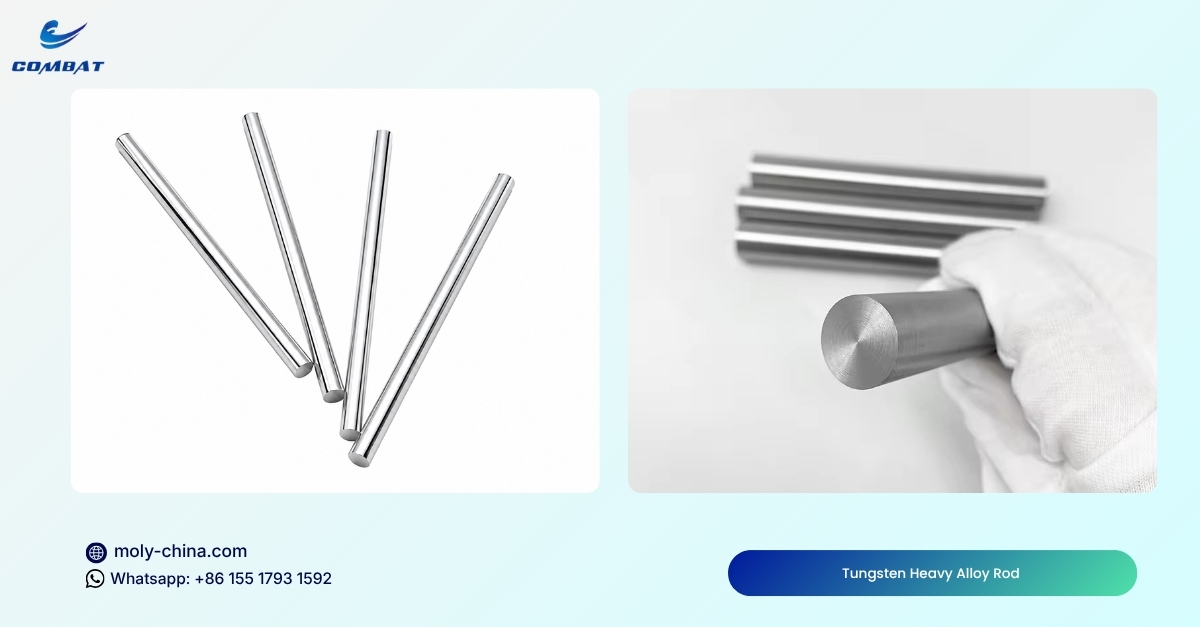
Tungsten heavy alloy is a high-density material containing typically 85–98 wt.% tungsten, with nickel, iron, copper or other metals used as the binder phase. Its combination of high density, mechanical strength and machinability makes it suitable for applications where compact radiation shielding is required. The main advantage is not simply its tungsten content. The engineering value comes from the balance between density, radiation attenuation, mechanical properties, machinability and component geometry.
4 Tungsten Alloy Grades
According to ASTM B777 international general standard, tungsten heavy alloy is divided into four grades, which are adapted to the needs of different shielding scenarios.
Grade 1 (90% tungsten content) density 17.0g/cm3, best toughness and processability;
Grade 2 (92.5% tungsten content) with a density of 17.5g/cm3, balanced performance and the strongest versatility;
Grade 3 (95% tungsten content) density 18.0g/cm3, suitable for precision high-end shielding scenarios;
Grade 4 (97% tungsten content) has a density of 18.5g/cm3, and the shielding efficiency is extremely optimal.
WNiFe vs WNiCu for Radiation Shielding
| Feature | WNiFe | WNiCu |
|---|---|---|
| Binder | Ni + Fe | Ni + Cu |
| Magnetic behavior | Generally magnetic | Non-magnetic / low permeability |
| Strength | Higher | Generally lower |
| Corrosion resistance | Good | Generally better |
| Machinability | Good | Good |
| Typical use | General shielding | Magnetic-field-sensitive environments |
| Cost | Generally lower | Generally higher |
Tungsten-nickel-iron alloy (WNiFe tungsten heavy alloy) has the advantages of high strength and high toughness, and has excellent mechanical properties. It is suitable for most general shielding scenarios and is slightly weakly magnetic. Tungsten-nickel-copper alloy (WNiCu tungsten heavy alloy) is a non-magnetic material with stronger corrosion resistance. It is specially adapted to special working conditions such as MRI equipment and precision sensing that have zero interference with the magnetic field.
How Does Tungsten Heavy Alloy Shield Radiation?
The core principle of radiation shielding is to consume and block the energy of ionizing radiation such as X-rays and gamma rays through the physical reaction of materials and rays, so as to avoid radiation pollution and personal injury caused by ray penetration. The shielding efficiency of a material is mainly determined by the two core indicators of density and atomic number.
High density means that there are more atoms per unit volume, which can form a denser ray interception barrier. The density of tungsten heavy alloy can reach 17.0-18.5g/cm3, up to 18.8g/cm3, which is more than twice that of steel (7.8g/cm3) and 1.5-1.7 times that of lead (11.3g/cm3). Under the same shielding thickness, tungsten alloy's absorption capacity of X-rays and gamma rays far exceeds that of lead, and its shielding advantages for high-energy gamma rays such as cobalt 60 are particularly prominent.
Why Is Tungsten Heavy Alloy Used for Radiation Shielding?
1. High Density Enables Compact Radiation Shielding
The high density of tungsten heavy alloy allows engineers to achieve the required radiation attenuation in a smaller volume than many conventional shielding materials. Modern medical equipment and precision testing instruments are generally developing in the direction of miniaturization and integration, and the shielding space reserved inside the equipment is extremely limited. With its ultra-high density, tungsten heavy alloy can achieve high-standard shielding effect in a very small size and ultra-thin thickness. Compared with lead materials, the volume is reduced by 30%-40% under the same protection level, which is perfectly adapted to space-restricted scenarios such as medical collimators, isotope shielding cans, and portable testing equipment, and provides core support for the lightweight and refined design of equipment.
2. Safe and non-toxic
The heavy metal toxicity of lead materials is a long-term pain point in the industry. Long-term exposure will endanger the health of operators, and the waste, recycling, and disposal of lead products are strictly restricted by environmental regulations, and the cost of corporate compliance is extremely high.
Tungsten heavy alloy is non-radioactive and does not present the same lead-related toxicity concerns associated with traditional lead shielding. Its solid metallic form also provides good mechanical stability and durability in demanding industrial environments. Compared with lead-based shielding, tungsten heavy alloy can reduce concerns associated with lead exposure and lead-containing waste, although applicable local environmental and waste-management requirements should still be followed. It not only guarantees the personal safety of medical staff and technical operators, but also significantly reduces the cost of environmental protection compliance and operation and maintenance pressure of enterprises, which is in line with the global development trend of green manufacturing and safe production.
3. Excellent mechanical properties
The traditional lead material has a soft texture, and it is easy to sag, deform, and creep under force. Long-term use will cause problems such as damage and displacement of the shielding layer, which will cause the shielding to fail, require frequent maintenance and replacement, and have high operation and maintenance costs.The tensile strength of tungsten alloy can reach 700–1000MPa, the strength is comparable to that of medium carbon steel, and the mechanical stability is excellent. At the same time, it has excellent thermal stability, high temperature resistance and low coefficient of thermal expansion. Its high strength and dimensional stability make tungsten heavy alloy suitable for shielding components exposed to mechanical loads, repeated handling and demanding operating environments. For elevated-temperature applications, the actual service temperature and thermal conditions should be evaluated during material selection. It can maintain stable shielding performance for a long time and its service life far exceeds that of traditional shielding materials.
4. Can be precision machined
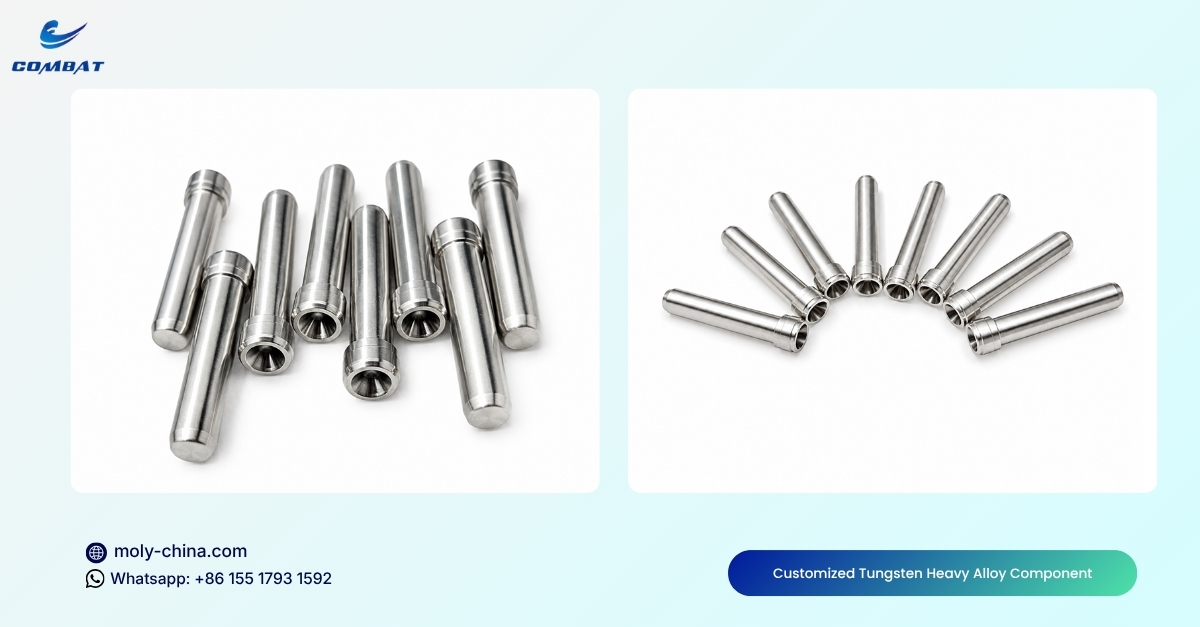
Pure tungsten material has high hardness and high brittleness, and it is extremely difficult to process. It cannot make high-precision shielding parts with complex structures, and its application scenarios are severely restricted.Whether it is a multi-leaf collimator with a complex structure, a special-shaped medical shield, a high-precision isotope storage container, or a microporous ray baffle, tungsten alloy can be formed and processed with high precision to meet the precision and customization needs of shielding components in the fields of medical, scientific research, and nuclear power.
5. Customized selection
Tungsten alloy supports the customization of magnetic and non-magnetic versions, which are suitable for differentiated special working conditions. WNiFe tungsten heavy alloy is suitable for general industrial and nuclear power scenarios, with high cost performance and stable performance. Non-magnetic WNiCu tungsten heavy alloy will not produce magnetic field interference, and can be safely used in MRI nuclear magnetic equipment, precision optical instruments, and magnetic field-sensitive scientific research equipment.
Tungsten alloy VS traditional radiation shielding material
In order to more intuitively reflect the comprehensive advantages of tungsten alloy, the following compares the five mainstream radiation shielding materials from the dimensions of density, shielding efficiency, safety, durability, cost, and compliance to help companies quickly select and adapt to working conditions.
1. Tungsten heavy alloy VS lead material
Lead is a traditional shielding material with low cost and simple processing, which is suitable for large-scale fixed and low-requirement static shielding scenarios. However, its density is low, and shielding the same rays requires a larger thickness and volume, which cannot be adapted to precision equipment. At the same time, lead is toxic, environmental protection is strictly controlled, it is easy to deform and fail after long-term use, and its durability is poor. Because tungsten heavy alloy has a much higher density than lead, it can provide comparable attenuation with less material thickness in many X-ray and gamma-ray shielding applications. The exact shielding thickness, however, depends on radiation energy, source strength, geometry and the required attenuation level.
2. Tungsten heavy alloy VS depleted uranium
The density of depleted uranium is close to that of tungsten heavy alloy, and the shielding performance is slightly better, but the defects are extremely obvious.Depleted uranium is inherently radioactive, has radiation safety risks, and is strictly regulated by NRC and other agencies. The procurement, use, and disposal processes are cumbersome, and the cost of compliance is extremely high. At the same time, the processing process has the risk of spontaneous combustion and poor safety.Tungsten heavy alloy is non-radioactive, has no processing risks, and has a low regulatory threshold. Its shielding performance lags only slightly behind that of depleted uranium, but it leads in comprehensive safety, practicality, and compliance.
How Are Tungsten Heavy Alloy Shielding Components Manufactured?
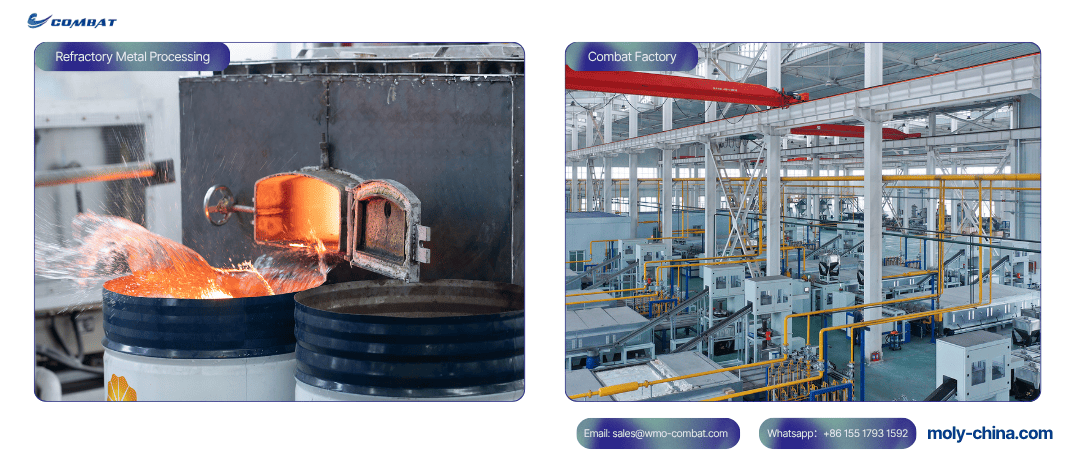
The excellent performance of tungsten heavy alloy shielding components, relying on the mature powder metallurgy liquid phase sintering process, can accurately control the density, purity and accuracy throughout the process, to ensure that the shielding performance of each batch of products is stable and consistent, and there is no performance deviation.
1. Powder ratio and mixing
Tungsten heavy alloy manufacturers use high-purity tungsten powder and bonded metal powder, in strict accordance with ASTM standards, to accurately control the proportion of tungsten content.Through the ball milling and mixing process, the powder is evenly fused, the composition deviation is eliminated, and trace additives are added to optimize the sintering effect. The raw materials can be traced throughout the process, and they are suitable for high-demand scenarios in medical and nuclear power.
2. Pressing and forming
The molding process is selected according to the structure of tungsten heavy alloy components. The one-way molding process is used for simple plate and cylindrical components, and the cold isostatic pressing process is used for complex special-shaped, hollow, and high-precision components.The size of the pressed raw blank reserves the processing margin, the density is uniform and the structure is dense, which lays the foundation for subsequent sintering and molding.
3. Liquid phase sintering
The raw blanks are sintered at high temperature in a hydrogen-protected atmosphere, and the temperature is accurately controlled at 1450-1520℃.The bonded metal melts and flows, and the tungsten powder gap is filled by capillary action to achieve more than 99% densification. The finished product has no pores and no defects. The tungsten heavy alloy shielding performance is uniform and stable, and there will be no local shielding failure.
4.Post-processing and finishing
Sintered blanks can be forged and heat treated according to demand to optimize mechanical strength and toughness.Then, through precision processes such as turning and milling, grinding, and electric discharge machining, it is processed into finished components such as collimators, shields, and storage tanks required by customers, and the accuracy can meet the assembly needs of high-end equipment.
Finally, professional tungsten heavy alloy manufacturer support quality inspection and certification. The finished products are tested one by one for density, dimensional accuracy, mechanical properties, and shielding efficiency. Tungsten heavy alloy part for medical and nuclear power can provide a full set of material certification, test reports and traceability documents, which fully comply with industry acceptance standards.
Application of Tungsten Alloy Radiation Shielding Components
1. Medical and nuclear medicine
The tungsten heavy alloy shielding parts for medical field are the most widely used and demanding.
Tungsten heavy alloy component in tumor radiotherapy equipment can accurately shape the radiation beam and accurately focus high-energy rays on tumor lesions, greatly reducing the damage of scattered rays to surrounding healthy tissues, and improving the accuracy and therapeutic effect of radiotherapy.
In nuclide diagnosis and treatment scenarios, custom tungsten heavy alloy shields, medicine bottle shields, and isotope storage containers can effectively protect medical staff from radiation damage during dispensing, administration, and transportation, in line with ALARA's minimum radiation exposure safety guidelines.
For magnetic-field-sensitive equipment such as MRI systems, WNiCu can be considered for components where low magnetic permeability is required. MRI itself does not use ionizing radiation, so the role of WNiCu in MRI-related applications is primarily related to magnetic compatibility rather than X-ray or gamma-ray shielding.
2. Nuclear power and scientific research
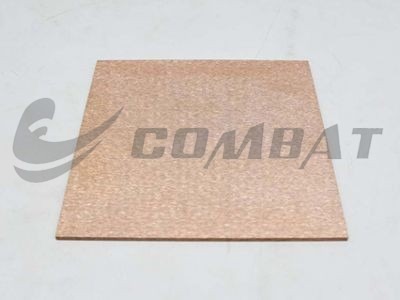
Tungsten heavy alloy in nuclear industry is used for radioactive source fixing brackets, tungsten heavy alloy radiation shielding baffles, nuclear waste transfer liners, reactor penetrating parts shielding and other components. Tungsten heavy alloy plate has strong stability, high temperature resistance and corrosion resistance, can be adapted to the harsh working conditions of nuclear power for a long time, and stably blocks gamma-ray radiation.
In scientific research scenarios such as high-energy physics, particle accelerators, and synchrotron radiation laboratories, tungsten alloy shielding baffles, ray cutters, and beam collimating components can accurately control the range of rays, block stray radiation, and ensure the safety of experimental equipment and researchers.
3. Industrial non-destructive testing and security field
Industrial ray non-destructive testing (NDT) equipment and industrial X-ray flaw detectors need to accurately shield scattered rays to avoid radiation pollution in the workshop.Tungsten alloy shielding cover, ray cut-off block, and equipment protective shell are compact in size and efficient in shielding, which are suitable for the high-frequency operation needs of industrial testing equipment.
In port security inspection and cargo scanning equipment, tungsten alloy shielding components can effectively block the scattered lines of equipment, avoid radiation leakage, and ensure the safety of personnel in public areas. At the same time, the volume of equipment is streamlined and the degree of equipment integration is improved.
4. Oil and gas underground exploration field
The underground detection equipment for oil and gas exploration will be equipped with a radioactive ray source for formation data detection.The underground space is small, the working conditions are humid and corroded, and the traditional shielding materials are large in size, easy to corrode, and easy to deform, and cannot be adapted to the needs of the operation.
Tungsten alloy shielding casing and shielding shell of detection instruments, relying on the advantages of compact size, corrosion resistance and high stability, can achieve efficient radiation shielding in a small underground space, ensuring the stable operation of detection equipment and the safety of underground operations.
How to Choose the Right Tungsten Heavy Alloy for Radiation Shielding
Selecting the right tungsten heavy alloy for radiation shielding requires more than choosing the highest tungsten content. The material grade, radiation type, energy level, required attenuation, available space and component geometry should all be considered.
1. Identify the radiation type. Determine whether the application involves X-rays, gamma rays, electron beams or other ionizing radiation. Different radiation sources require different shielding calculations.
2. Determine the radiation energy and required attenuation. Shielding thickness should be calculated according to photon energy, source strength, exposure conditions and the target attenuation level. There is no universal thickness suitable for every application.
3. Select the appropriate ASTM B777 grade. Higher tungsten content generally provides higher density and greater shielding performance per unit volume, while lower grades may offer advantages in machinability and cost. Grades 1–4 can therefore be selected according to the balance between shielding requirements and component design.
4. Consider magnetic requirements. WNiFe is commonly used for general shielding applications where magnetic compatibility is not critical. For magnetic-field-sensitive equipment, WNiCu may be considered because of its low magnetic permeability.
5. Evaluate machining and geometry. Complex shielding components may require turning, milling, grinding or EDM. The alloy grade should match the required dimensional accuracy and manufacturing process.
6. Confirm quality documentation. For critical medical, nuclear or industrial applications, material composition, density, dimensional inspection, mechanical properties and traceability should be verified according to the project requirements.
The right tungsten heavy alloy is therefore the grade that provides the required radiation attenuation while also meeting the application's mechanical, magnetic, dimensional and manufacturing requirements.
Frequently Asked Questions
Q1: Is the shielding effect of tungsten alloy better than that of lead?
Yes, in most precision and high-end working conditions, tungsten alloy is comprehensively superior to lead. At the same thickness, the shielding efficiency of tungsten heavy alloy for X-rays and gamma rays is 1.5-1.7 times that of lead. At the same time, tungsten alloy is non-toxic and environmentally friendly, has high strength, no deformation, and stronger durability. Only for large-scale fixed low-budget scenarios, lead still has a cost advantage.
Q2: Is tungsten alloy toxic and radioactive?
It is completely non-toxic and non-radioactive, and is a safe and environmentally friendly green shielding material.The material itself will not release radiation, there is no toxic hazard of heavy metals, and there is no need for special environmental protection approval and control for production, use, and scrap. Operators can be in safe and long-term contact, in line with global production safety and environmental protection standards.
Q3: Which tungsten alloy grade should I choose for medical shielding scenarios?
For precision shielding components of medical multi-leaf collimators and imaging equipment, ASTM B777 grade 3 high-density heavy alloys are preferred for optimal shielding accuracy and efficiency; medical syringe shields and conventional nuclide storage containers can choose grade 2 tungsten heavy alloy, which are more cost-effective; non-magnetic tungsten-nickel-copper alloys (WNiCu) must be selected for components close to MRI equipment.
Q4: Does tungsten heavy alloy shielding component support customization?
Reliable tungsten material manufacturer support full-dimensional customization. Various special-shaped and high-precision shielding components can be processed according to customer drawings, and follow-up processing such as polishing, coating, and precision punching can be provided at the same time.
Q5. Is tungsten heavy alloy suitable for medical radiation shielding?
There is no universal shielding thickness for tungsten heavy alloy. The required thickness depends on radiation type, photon energy, source activity, distance, geometry and the required attenuation level. For engineering applications, shielding thickness should be calculated from the specific radiation source and protection target rather than selected from a generic material table.
Conclusiom
With four dimensions of comprehensive shielding performance, safety and environmental protection, mechanical stability, and processing adaptability, tungsten alloy is currently the commercial radiation shielding material with the best overall performance.We can provide full-grade ASTM standard tungsten heavy alloy shielding plates, blocks, and precision customized components. Contact us to provide professional tungsten alloy metal material technical support.