

How to Choose Right Molybdenum Strip for Your Application?
作者:kangbote 时间:2026-08-25 11:48:55
Molybdenum strip is a high-performance refractory metal product widely used in high-temperature, vacuum, semiconductor, lighting, glass, and electrical applications. Its combination of high-temperature strength, excellent thermal conductivity, low thermal expansion, and dimensional stability makes it suitable for demanding industrial environments. This guide explains how to choose molybdenum strip for different industrial applications, including pure molybdenum, TZM, and Mo-La alloys. It also covers molybdenum strip thickness and width, surface finishes, dimensional tolerances, processing conditions, and application-specific selection criteria.
What is Molybdenum Strip And Key Properties?
Molybdenum strip, also known as molybdenum foil or molybdenum flat strip, is a thin strip metal consumable made of pure molybdenum or molybdenum alloy blank by multi-pass cold rolling process, belonging to the core refractory metal precision products. The industry is divided into molybdenum foil, thin molybdenum strip, medium thick molybdenum strip according to thickness, which can be processed into coil or straight strip to meet the needs of automatic mass production and customized deep processing.
The purity of industrial general molybdenum strip is ≥99.95%, and it implements ASTM B386 industry general standard. The market mainly includes three categories: pure molybdenum strip, TZM molybdenum alloy belt, and lanthanum-doped molybdenum strip (Mo-La ˇ O). The alloy modification process makes up for the shortcomings of high temperature performance of pure molybdenum materials and adapts to various harsh industrial conditions.
Key Properties of molybdenum strip
The advantage of molybdenum ribbon comes from the stable physical and chemical properties of molybdenum metal. The melting point of molybdenum can reach 2623℃, and it can still maintain structural stability in high temperature environment above 1000℃, and it is not easy to soften and deform, and it is suitable for all kinds of high temperature equipment core accessories.
With good high temperature strength and creep resistance, molybdenum strip is not easy to relax and deform under long-term high temperature load, and can be used for vacuum furnace load-bearing members and high temperature heating elements. At the same time, the thermal conductivity and electrical conductivity of molybdenum strip are stable, which can meet the dual requirements of equipment heat dissipation and electrical conduction operation.
Molybdenum strip has a very low thermal expansion coefficient, which can be well matched with quartz glass, monocrystalline silicon, ceramics and other materials. It can effectively reduce the thermal stress caused by cold and hot alternation of equipment and reduce the problem of sealing cracking. At the same time, it has good chemical stability at room temperature, extremely low vacuum vapor pressure, and is not easy to release gas to pollute workpieces, which is suitable for semiconductor ultra-high vacuum processing scenarios.
However, molybdenum strip has clear use limitations: in an aerobic environment above 600-700 ° C, molybdenum oxide will be rapidly oxidized, resulting in material loss and performance attenuation. Therefore, molybdenum strip is used under high temperature conditions, and vacuum, inert gas or reducing protective atmosphere are required.
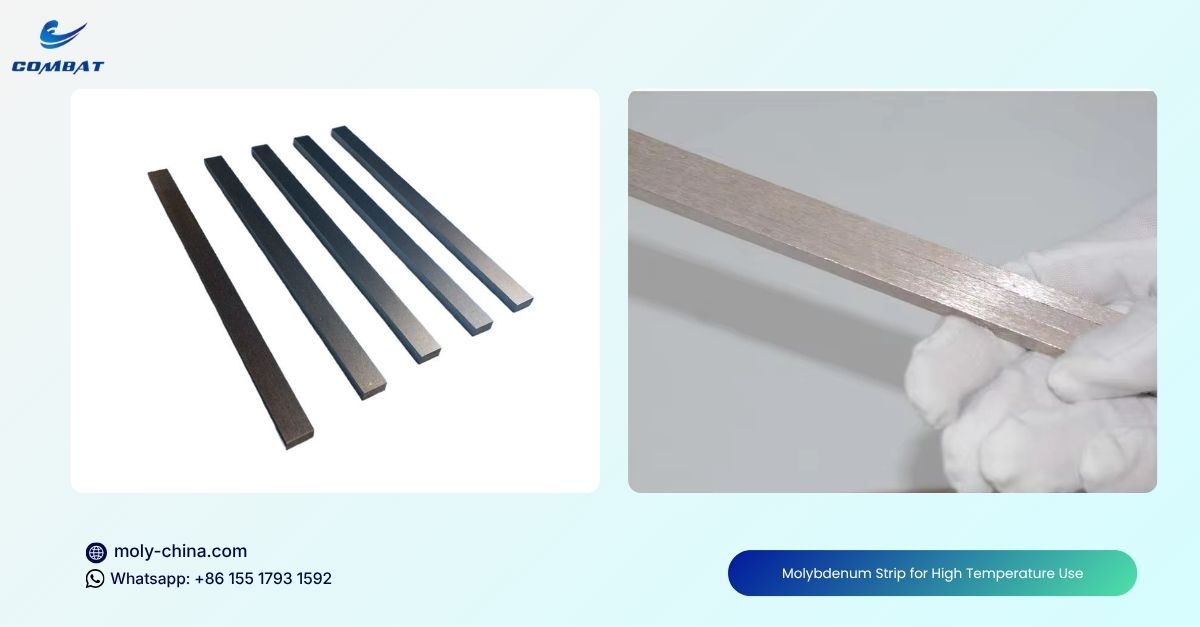
Pure Molybdenum vs. TZM vs. Mo-La: Which Should You Choose?
molybdenum strip material is the core decision point for selection, which directly determines the material's high temperature resistance limit, creep resistance, molding performance and procurement cost. The mainstream products in the market are divided into three categories: pure molybdenum strip, TZM molybdenum alloy belt and lanthanum doped molybdenum strip, which are suitable for different working conditions.
Pure Molybdenum Strip for General High-Temperature Applications
Pure molybdenum strip is a basic style industrial molybdenum product with purity ≥99.95%, high cost performance, strong versatility and good formability. Retain the molybdenum base thermal conductivity, electrical conductivity, low thermal expansion characteristics, suitable for all kinds of simple secondary deep processing.
The upper limit of stable service temperature of pure molybdenum strip is 1000-1100℃, and there is no obvious creep and embrittlement problem in this temperature range. When the temperature exceeds 1100℃, recrystallization embrittlement is easy to occur, and the creep resistance of molybdenum strip is significantly reduced, and it cannot withstand long-term mechanical load, which is not suitable for severe working conditions of high temperature bearing and high frequency thermal cycle.
TZM Molybdenum Strip for High-Temperature Strength
TZM molybdenum alloy is the mainstream high temperature molybdenum material, through the addition of trace titanium, zirconium, carbon elements to form a stable carbide strengthening phase. Compared with pure molybdenum strip, its recrystallization temperature is increased by 200-400℃, up to 1350-1500℃, and the high temperature strength and creep resistance are greatly improved. The disadvantage is that the molding difficulty is higher than that of pure molybdenum strip, and the procurement cost of TZM alloy molybdenum strip is high, which is not suitable for low-cost conventional working conditions.
Mo-La Molybdenum Strip for Thermal Cycling Applications
Mo-La lanthanum molybdenum strip belongs to oxide dispersion strengthened molybdenum material, relying on uniform distribution of lanthanum oxide particles refining, stable grain structure, excellent comprehensive properties. Its recrystallization temperature can reach 1300-1600℃, and high-grade products can be stably served to 1800℃.
Mo-La alloy has the advantages of excellent thermal shock resistance and thermal cycle resistance, and can maintain good toughness after repeated high and low temperature switching, and is not easy to cause grain coarsening and embrittlement cracking. At the same time, the metal machinability of Mo-La alloy is better than that of TZM molybdenum alloy, giving consideration to high temperature performance and processing adaptability.
Comparison Table for Three Major Materials
|
Selection Dimension |
Pure Molybdenum Strip |
TZM Molybdenum Alloy Strip |
Mo-La Lanthanum-Doped Molybdenum Strip |
|
Maximum Continuous Service Temperature |
≤1100℃ |
1100-1500℃ |
1300-1800℃ |
|
High Temperature Strength / Creep Resistance |
General, suitable for light loads |
Excellent, suitable for heavy-load structures |
Good, balances strength and toughness |
|
Thermal Cycling / Thermal Shock Resistance |
Weak, prone to embrittlement at high temperature |
Good, strong thermal stability |
Excellent, not easy to fail under repeated temperature changes |
|
Forming and Welding Performance |
Excellent, easy to bend and stamp |
General, relatively difficult to process |
Good, suitable for precision forming and welding |
|
Procurement Cost |
Low, cost-effective |
Moderate to high |
High, suitable for high-end precision working conditions |
|
Core Application Scenarios |
Lamp sealing, medium and low temperature insulation, general electronic accessories |
High temperature load-bearing structures, tooling and molds, heavy-duty furnace accessories |
High temperature heating elements, precision accessories with high-frequency thermal cycling |
How to Choose Molybdenum Strip Thickness and Width
Metal processing industry according to the thickness of the molybdenum strip is divided into four categories, the performance characteristics of all kinds of products and applicable scenarios to distinguish clearly, the selection does not need to blindly thicken, to avoid cost waste and processing problems.
- Ultra-thin molybdenum foil (0.015-0.10mm)has excellent formability, can realize micro bending, precision etching, and high thickness tolerance accuracy. Mainly used for high-end lamp glass sealing belt, semiconductor etching grid, film substrate, precision vacuum insulation layer and other lightweight, high-precision scenes. This specification has no structural load-bearing capacity and is only suitable for precision functional accessories.
- Thin molybdenum strip (0.10-0.40mm)is the most versatile specification with balanced comprehensive performance, formability, conductivity and structural strength. Widely used in lamps and lanterns internal accessories, electronic precision connectors, conventional furnace heat insulation, welding conductive belt and other scenes, can meet the stamping, bending and other secondary processing needs.
- Medium-thick molybdenum strip (0.40-1.0mm): The structural strength is significantly improved, the deformation resistance and creep resistance are stronger, and it is suitable for medium load conditions. Mainly used for vacuum furnace sintering tray, small support components, electronic heat dissipation base, aviation precision accessories, etc., after stress relief treatment can still complete simple molding processing.
- Thick molybdenum strip (>1.0mm)has strong rigidity, excellent load-bearing performance, almost no formability, and mainly depends on machining. Adapted to heavy-duty furnace body support structure, high-temperature tooling mold, large molten glass electrodes and other heavy-duty, high-rigidity demand scenarios, high-temperature conditions give priority to TZM, Mo-La alloy materials.
Molybdenum strip width selection principle
The core of molybdenum strip width selection is to match the finished product size, reduce the secondary cutting process, reduce material loss and processing error. Narrow molybdenum strips (1.5-10mm) are mostly formed by rolling molybdenum wires, with smooth edges and no burrs. They are suitable for high-precision narrow fittings such as lamp sealing, precision conductive circuits, and tiny leads.
The medium-width molybdenum strip (10-150mm) is an industrial general specification, which is suitable for most furnace body heat insulation sheets, common conductive fittings and general stamping parts, with high material utilization rate and optimal purchase cost performance. Wide molybdenum strip (300-600mm) is mainly used for large vacuum furnace integral heat shield, large sintering tray and other integrated components, reduce splicing gap, improve equipment sealing.
Key Points for Selection of Tolerance and Supply Form
Precision working conditions need to focus on dimensional tolerances. The tolerance of ultra-thin molybdenum foil can reach ± 0.002-0.005mm to ensure the accuracy and stability of glass sealing and precision etching. Medium-thick molybdenum strip tolerance is relatively loose, can be customized according to equipment requirements of precision tolerance specifications, suitable for high-end precision equipment.
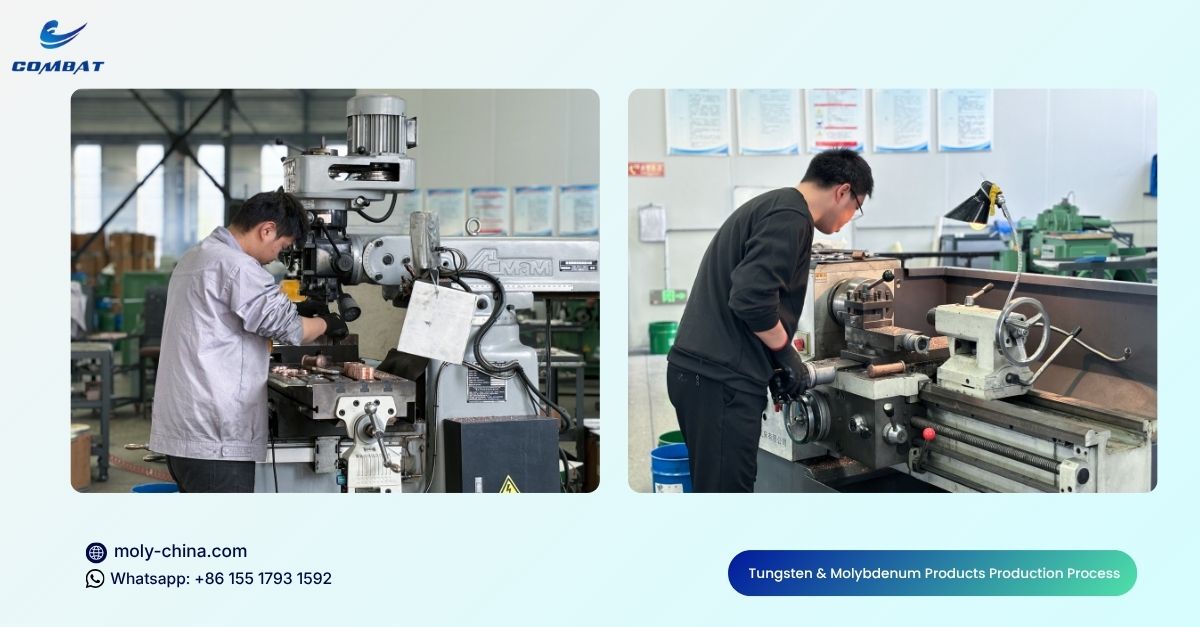
How to Choose the Right Molybdenum Strip Surface Finish?
Molybdenum belt surface technology is the core process difference point of each molybdenum belt manufacturer, which directly affects the cleanliness, sealing, bonding effect and service life of the material, and is a key selection detail that is easy to be ignored.
Rolled Molybdenum Strip for General Industrial Applications
The rolled surface is the basic factory condition of molybdenum strip manufacturer, retaining slight cold rolling texture, no additional polishing treatment, and the lowest production cost. The surface flatness is general, and there are trace impurities in the surface layer, which is not suitable for ultra-clean and high-airtight connection scenes. Rolling molybdenum strip is often used in ordinary vacuum furnace insulation, non-bearing furnace body accessories, conventional high temperature structural parts and other conditions without special requirements for surface quality.
Ground Molybdenum Strip for Improved Flatness and Surface Quality
After mechanical grinding and fine milling, the rolling lines, oxide scales and surface defects on the molybdenum strip surface are completely removed, the flatness and uniformity are greatly improved, and the surface quality is better than that of the conventional rolling surface. It is the mainstream finishing process of the middle end molybdenum strip manufacturer. The molybdenum strip after grinding is used for precision furnace tooling, positioning fixture, medium precision stamping parts and other scenes to meet most of the mid-end precision industrial needs.
Polished Molybdenum Strip for Precision Applications
Polishing and electrolytic polishing is a high-end surface technology, high-end molybdenum belt manufacturers can reduce the surface roughness of molybdenum belt to Ra≤0.2μm, the surface is bright and smooth, no impurities, no micropores. Electropolishing can completely remove the surface oxide layer and embedded particles, greatly reduce the vacuum outgassing rate, and improve the cleanliness of the material. Polished molybdenum tape is used for precision sealing of quartz glass, semiconductor ultra-high vacuum equipment accessories, optical reflectors, precision film deposition substrates and other scenes.
How to Choose Molybdenum Strip for Different Applications?
Molybdenum strips are commonly used in various industrial applications.
Molybdenum Strip for Vacuum Furnaces
Rolling surface pure molybdenum thin strip is often used for vacuum furnace heat shield, ordinary lining accessories can be selected, the best cost performance. TZM molybdenum alloy medium thick belt is preferred for sintering trays, support columns and furnace body tooling that require long-term high temperature load-bearing to improve high temperature creep resistance and avoid long-term load deformation.
Mo-La lanthanum doped molybdenum belt is often used to manufacture heating elements with frequent cold and hot cycles and precision furnace accessories. With excellent thermal shock resistance, it can effectively resist repeated temperature shock, reduce embrittlement cracking failure and prolong the service life of accessories.
Molybdenum Strip for Special Lamp Glass Sealing
With low thermal expansion, high cleanliness, perfect glass adhesion, high purity ultra-thin pure molybdenum belt used in conventional halogen lamps to ensure the sealing effect, prevent air leakage failure.
High-end industrial special lamps, high-frequency start-stop lamps, it is recommended to use lanthanum doped molybdenum belt to improve high temperature toughness and bonding stability, resist the thermal shock of frequent start-stop lamps, and prolong the overall service life of lamps.
Molybdenum Strip for Semiconductor Equipment
Semiconductor equipment on molybdenum belt cleanliness, low outgassing requirements are extremely high, must choose ≥99.95% high purity molybdenum belt, with electrolytic polishing process, minimize surface particles and vacuum outgassing. Etching grid, thin film substrate selection of ultra-thin molybdenum foil, heat dissipation base, structural accessories selection of high-purity molybdenum belt.
Equipment load-bearing high temperature accessories, preferably modified alloy molybdenum belt, balance cleanliness, high temperature stability and structural strength, avoid high temperature gas pollution precision workpiece, ensure semiconductor processing yield.
Molybdenum Strip for Glass Manufacturing
Molybdenum belt is used for glass melting electrode, stirring member, high temperature forming tooling, long-term contact with high temperature molten glass and other scenes. Molybdenum strip is resistant to molten glass erosion and stable in high temperature structure, which can avoid impurities from mixing into glass melt and ensure the purity and quality of glass products.
Molybdenum Strip for Electrical and Electronic Components
Relying on excellent thermal conductivity, high purity thin pure molybdenum belt is often used for high temperature conductive leads and small heat dissipation bases to meet the conventional heat dissipation and electrical conductivity requirements. High power, high temperature electronic accessories, it is recommended to use stress relief molybdenum belt, improve structural stability, avoid high temperature deformation.
Polished molybdenum tape is used for precision packaging and chip cooling accessories to improve the adhesion and heat dissipation efficiency and ensure the long-term stable operation of electronic equipment.
Molybdenum Strip for Precision Components
For engineers, it is preferred to use stress-relieved pure molybdenum strip or Mo-La molybdenum strip to manufacture precision parts that require bending, stamping and etching. This molybdenum belt has excellent formability and is not easy to crack.
Ultra-thin precision etching accessories use polished thin molybdenum foil to ensure accurate etching patterns and smooth edges; thick structural molded parts use medium thickness specifications to match the bending radius in advance to avoid molding defects.
How Does Molybdenum Strip Processing Affect Material Selection?
The final quality and performance of molybdenum strip largely depend on the melting, rolling and annealing production process of molybdenum strip manufacturer.
Reliable molybdenum strip manufacturers use two main melting processes: powder metallurgy and vacuum arc melting. Among them, molybdenum belt produced by powder metallurgy process has uniform composition, controllable impurities and strong batch stability, which is the mainstream process for mass production of high-purity lightweight precision parts in most molybdenum belt factories. Vacuum arc melting process threshold is higher, finished molybdenum strip density is higher, plasticity is better, suitable for thick specifications, heavy load, weldable structural parts, can effectively improve the welding embrittlement problem, mostly customized production for high-end molybdenum strip manufacturers.
Cold rolling pass and reduction are the key process indexes to distinguish high quality molybdenum strip factory from ordinary molybdenum strip manufacturer. Molybdenum strip produced by high reduction cold rolling process has high hardness and strength, but its plasticity is weak, suitable for fixed parts without secondary molding, and is mostly used for conventional industrial mass production specifications. The molybdenum strip produced by small reduction multi-pass finishing rolling process has uniform texture, low internal stress, excellent formability, and is suitable for precision stamping and bending deep processing. It is the exclusive process customized by high-end molybdenum strip manufacturers for precision parts.
Annealing process is the core key of molybdenum strip production, and it is also the focus of process control of major molybdenum strip manufacturers. Different annealing methods directly determine the final mechanical state of molybdenum strip: stress relief annealing molybdenum strip takes into account strength and plasticity, which is the preferred material for forming processing; complete recrystallization annealing molybdenum strip has good toughness and low strength, which is only suitable for no-load pure forming parts.
Common Mistakes When Choosing Molybdenum Strip
The problems of early failure and low cost performance of most molybdenum strips are all due to the misunderstanding of selection. The following ten industries high-frequency errors, covering materials, specifications, processes, working conditions to adapt to the full dimension, can help users quickly avoid the pit.
- Mistake 1: Default all molybdenum strip performance consistent.Ignoring the performance difference of pure molybdenum, TZM and Mo-La, the pure molybdenum strip is misused under high temperature and heavy load conditions, and rapid embrittlement deformation is easy to occur. Avoidance: According to the operating temperature and load selection, 1100℃ above the heavy load scene priority alloy molybdenum belt.
- Mistake 2: Confusing the heat treatment status of materials.Recrystallized molybdenum strip strength is insufficient, not suitable for load-bearing structure; stress relief molybdenum strip long-term high temperature use easy recrystallization embrittlement. Avoidance: forming processing selection stress relief state, high temperature static service selection high temperature alloy material.
- Mistake 3: blindly thickening specifications to enhance strength.Simple thickening molybdenum belt will increase material cost, molding difficulty and equipment load, and cannot solve the problem of high temperature creep from the root. Avoidance: Upgrade materials to improve high temperature performance rather than simply thickening size.
- Mistake 4: Neglecting the surface process conditions.If molybdenum strip with ordinary rolling surface is used in semiconductor and lamp sealing scene, it is easy to cause gas release pollution and sealing leakage. Avoidance: polishing or electrolytic polishing process is selected for precision clean and high airtight scenes.
- Mistake 5: molybdenum belt is used in high temperature aerobic environment.In the aerobic environment above 700℃, the oxidation rate of molybdenum belt is accelerated, and it will continue to lose failure. Avoidance: High temperature service must be matched with vacuum or inert, reducing protective atmosphere.
FAQ Frequently Asked Questions
Q: What is the conventional thickness range of molybdenum strip?
A: The thickness of industrial molybdenum strip covers 0.01mm ultra-thin molybdenum foil to 4.75mm thick molybdenum strip, which is classified as molybdenum plate. Among them, 0.025-0.5mm is the general mainstream specification, suitable for most industrial scenarios, special conditions can support customized rolling.
Q: Can the molybdenum strip be bent?
A: Molybdenum strip can be bent, but the forming effect is affected by material, state and thickness. The stress relief pure molybdenum strip and Mo-La molybdenum strip have the best bending performance at room temperature, and the thin strip below 0.5mm can realize conventional bending. TZM alloy and recrystallized molybdenum strip are easy to crack, and warm bending process is recommended for thick fittings.
Q: Molybdenum strip can be welded?
A: Yes. Molybdenum strip can be welded, preferably electron beam welding, laser welding, inert gas shielded welding, the whole process should be isolated from air to avoid oxidation. The welding performance of pure molybdenum and Mo-La molybdenum strip is better than that of TZM alloy. Annealing treatment should be done after welding to reduce welding stress and avoid embrittlement and cracking.
Q: What is the highest temperature resistance of molybdenum strip?
A: The melting point of molybdenum metal is 2623 ℃, but the actual service temperature is limited by the material. The stable service limit of pure molybdenum strip is 1100 ℃,TZM molybdenum strip is 1500 ℃, and Mo-La molybdenum strip is 1800 ℃. All molybdenum strips must be used at high temperature to avoid air oxidation environment.
Q: Does the molybdenum strip support custom machining?
A: Support full-dimensional customization, can be customized molybdenum strip thickness, width, length, tolerance, surface process, material state, at the same time can complete bending, stamping, cutting, polishing, drilling and other deep processing, adapt to all kinds of non-standard precision accessories requirements.
Q:How to select a reliable molybdenum strip supplier?
A: Priority is given to molybdenum strip manufacturers with independent smelting, rolling and annealing processes to ensure quality stability. It is necessary to verify ISO quality system certification and ASTM standard compliance, provide complete material inspection reports, and have the ability to adapt to working conditions, support customized solutions and after-sales technical support.
Conclusion
The core logic of choosing a molybdenum band is not the pursuit of the highest parameters and the optimal material, but accurate matching of working condition requirements and material properties. If you need a customized molybdenum strip selection scheme for specific equipment and specific working conditions, contact us to provide detailed parameters and obtain accurate material, specification and process matching suggestions.