

Uses of Tungsten Copper Alloys in Electronic Component Manufacturing
作者:kangbote 时间:2026-04-10 09:14:59
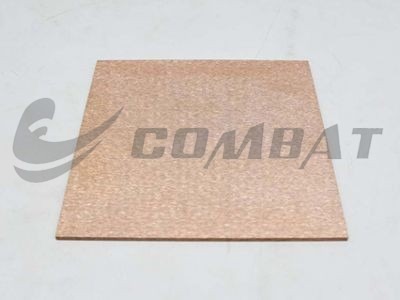
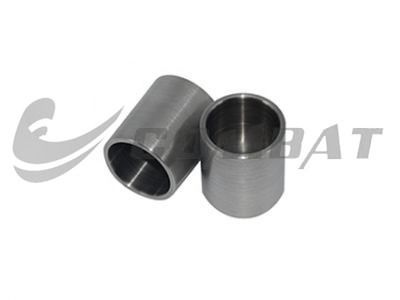
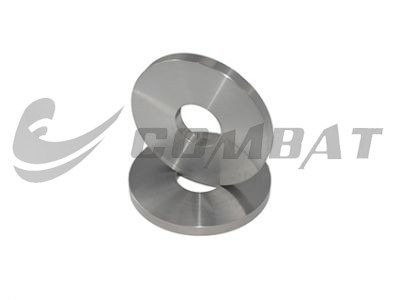
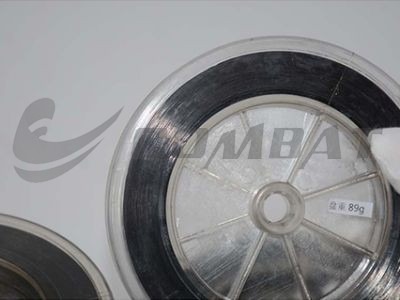
The manufacturing of electronic components is accelerating towards precision, miniaturization and high power. Tungsten-copper (WCu) alloy combines the high strength and melting point of tungsten with the high thermal conductivity and conductivity of copper, and has great application value and market potential in the manufacture of advanced electronic components.
Understanding Tungsten-Copper Alloys: How to Prepare?
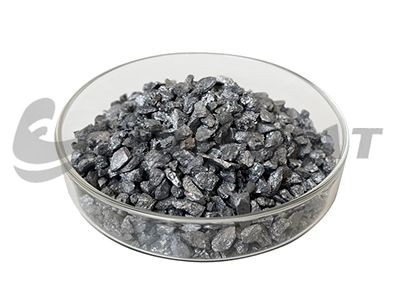
Tungsten-copper alloy (WCu) is a composite material composed of tungsten (W) and copper (Cu), which is prepared by powder metallurgy process ——after uniformly mixing tungsten powder and copper powder, it undergoes pressing, high-temperature sintering, copper leaching and other processes to finally form an alloy material with a uniform microstructure. It retains the high strength properties of tungsten while fully utilizing the thermal and electrical conductivity advantages of copper, laying the foundation for its application in advanced electronics.
Why choose Wcu alloy for high-end electronics manufacturing?
Pure copper, graphite and other materials commonly used in traditional electronic manufacturing have obvious performance shortcomings: pure copper has a low melting point and is easily deformed at high temperatures, while graphite has poor ablation resistance and rapid loss. Tungsten-copper alloy achieves a perfect balance between “strength and thermal conductivity, precision and durability”, which can not only meet the precision processing needs of high-end electronic components, but also cope with harsh working environments such as high power, high temperature, and high pressure:
Strong stability in high temperature environment
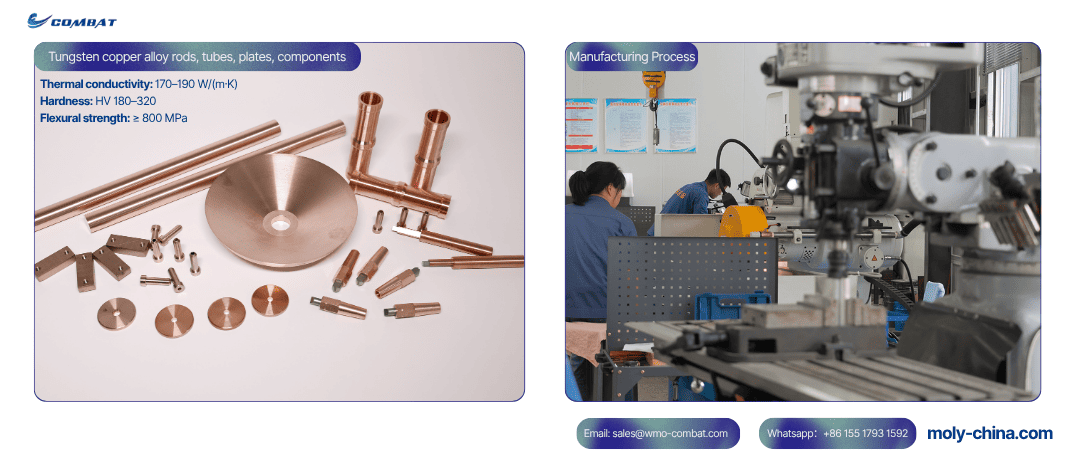
Tungsten has a melting point of up to 3410℃. Tungsten-copper alloy can still maintain structural stability in extreme high temperature environments and will not soften or deform. By adjusting the Wcu ratio, the thermal expansion coefficient can be controlled between 7~11×10⁻⁶/K, which is perfectly matched with semiconductor materials such as silicon and gallium arsenide.
Excellent conductivity
The copper composition gives tungsten-copper alloy excellent thermal and electrical conductivity. According to tests, the thermal conductivity of tungsten-copper alloys is usually between 160~260W/(m·K), and the conductivity is about 30%~50% of the International Annealed Copper Standard (IACS).
Arc ablative resistance
Tungsten-copper alloy has extremely strong resistance to arc erosion. In scenarios such as plasma discharge and high-voltage switches, its service life far exceeds that of traditional materials such as copper and graphite. It can effectively reduce equipment maintenance costs and improve the reliability of electronic devices.
Other key advantages of tungsten-copper alloys
Tungsten-copper alloy also has the characteristics of wear resistance and corrosion resistance, low vapor pressure (adaptable to vacuum environment), balanced mechanical properties and easy processing. The density of tungsten-copper alloy is usually between 12.0~16.5g/cm³, and the Vickers hardness can reach 180~320HV, which can resist losses during processing.
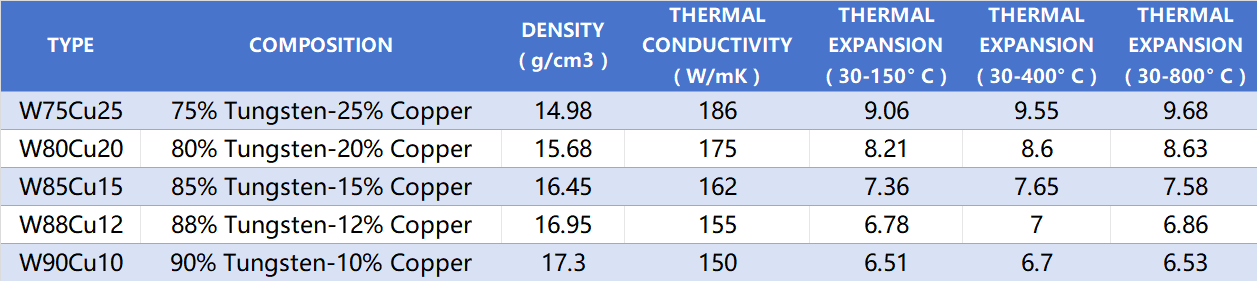
Tungsten-copper alloy rods as electrodes for electric spark machining (EDM)
EDM is a key process for forming high-end electronic components (such as precision molds and semiconductor parts), and the performance of the electrodes directly determines the processing accuracy and efficiency. Tungsten-copper alloy rods have become the material of choice for EDM electrodes.
Main application scenarios
Tungsten-copper EDM electrodes are widely used in precision electronic molds, PCD part processing, and the manufacture of slender rods, conduits, and special-shaped electrodes, fully covering the precision molding needs of semiconductors and electronic components. Especially suitable for cavity forming processing of difficult-to-process materials such as cemented carbide and tungsten steel.
Core advantages of tungsten-copper alloy electrodes over traditional electrodes
Compared with traditional copper and graphite electrodes, tungsten copper electrodes have significant advantages: strong ablative resistance, which solves the pain point of rapid loss of traditional electrodes; high density and uniform microstructure, which can improve processing accuracy and surface finish; fast heat dissipation and reduce thermal deformation.
It is recommended to use tungsten copper rod electrode with tungsten content of 70%–80%, which can balance low loss, high accuracy and heat dissipation needs, and ensure stable electrode shape when processing complex molds.
Tungsten-copper alloy components for electronic packaging and heat dissipation parts
Main application scenarios
Tungsten-copper alloy is mainly used for packaging substrates, heat sinks, heat sinks, lead frames and other components of high-end electronic devices such as IC chips, AI accelerators, GPUs/ASICs, IGBT modules, microwave power tubes, etc. The tungsten-copper composite material for thermal management developed by Jiangxi University of Science and Technology has been applied to laser diodes for microelectronics, optical communications, ceramic packaging and other fields.
Core performance advantages
The thermal expansion coefficient (CTE) of tungsten-copper alloy bar can be flexibly adjusted by adjusting the tungsten-copper ratio, which can perfectly match semiconductor materials such as silicon wafers, gallium arsenide, and ceramic substrates, avoid thermal stress caused by differences in thermal expansion and contraction, and prevent device interface cracking or failure.
The thermal conductivity of Wcu alloy can reach 170~190 W/(m•K), which can quickly derive the heat generated when high-power devices are working, effectively alleviating the problem of heat aggregation; at the same time, it can achieve final size molding, helping electronic equipment develop in the direction of miniaturization and integration. The new Wcu electronic packaging material developed by Central South University in China has been successfully applied to high-end devices such as high-power pulse microwave tubes and integrated circuit modules.
Tungsten-copper alloy for electrical contacts and high-voltage switches
Main application scenarios
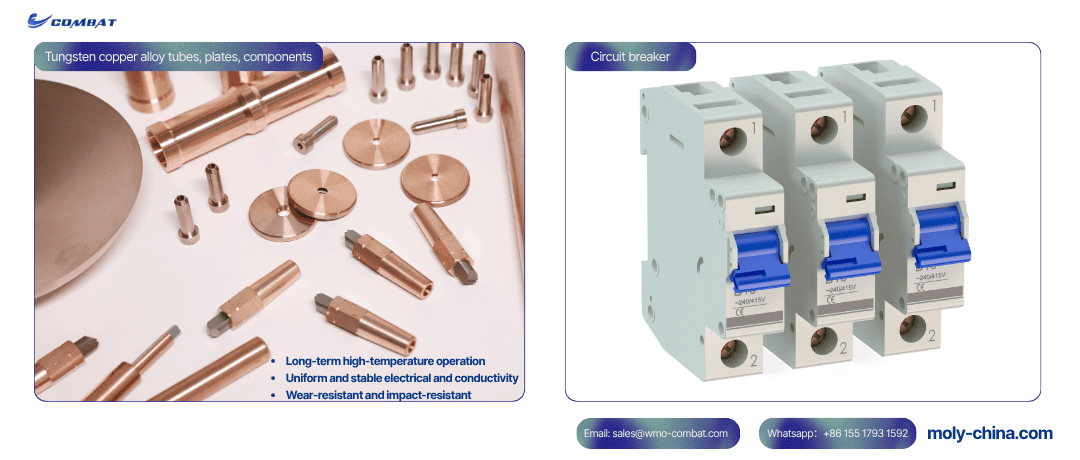
Tungsten-copper alloy is used for the opening and closing contacts of power electronic devices such as high-voltage vacuum switches, 128kV SF6 circuit breakers, 12kV/40.5KV high-voltage vacuum load switches, and lightning arresters. Tungsten copper electric contacts modified based on graphene have been successfully applied to 252KV/63KA open-column circuit breakers, greatly improving equipment performance. Combat produces tungsten-copper alloys for high-voltage switches and electrical contacts. They strictly comply with international standards such as ASTM B702 and meet stringent requirements in terms of porosity and microstructure to ensure product reliability and safety.
Core performance advantages
In high-voltage discharge scenarios, tungsten-copper alloy components will maintain the integrity of the tungsten skeleton through the “sweat heat dissipation” effect (heat is removed by evaporation of copper components), and has extremely strong resistance to arc ablation, fusion welding, and high voltage. This synergistic effect makes it less susceptible to damage in the arc environment and can maintain stable working performance.
Tungsten-copper alloy components are suitable for complex environments such as humid, flammable and explosive, and can ensure the safe and stable operation of power grids and electronic equipment. The graphene-modified Wcu electric contact can increase the number of full-power disconnections of high-voltage circuit breakers from 12 to 20, reducing the cost of the full life cycle.
What to consider when choosing a high-performance tungsten-copper alloy?
High-end electronic components have extremely high requirements for consistency and reliability of material properties. Therefore, the production of Wcu alloys bar for electronics must strictly follow quality control standards to ensure that each batch of products can meet the industry's stringent needs.
Core manufacturing standards
The production of tungsten-copper alloys components for electronics must strictly follow ISO international standards and ASTM B702 specifications. From raw material procurement, production and processing to finished product testing, standardized operations must be carried out throughout the entire process to ensure the consistency and reliability of product performance and meet the stringent requirements of high-end electronic manufacturing.
Refractory metal sintering process
The advanced copper infiltration process is used to achieve the optimal combination of tungsten and copper, increase the density of the material (up to more than 98.5%), ensure the uniform internal structure of the material, and avoid defects such as pores and inclusions. As a leading Chinese Wcu alloy manufacturer, Combat can evenly distribute tungsten and copper elements, greatly improving product quality.
Microstructural optimization
By accurately controlling the powder ratio and sintering parameters, the Wcu particles are evenly distributed to avoid component segregation, thereby ensuring consistent performance in all parts of the material and adapting to the processing and use needs of precision electronic components.
Compliance detection
All Wcu alloys for electronics must pass strict compliance testing and comply with the IACS international annealed copper standard, focusing on testing key parameters such as conductivity, hardness, density, and thermal expansion coefficient to ensure that product performance meets industry benchmarks.
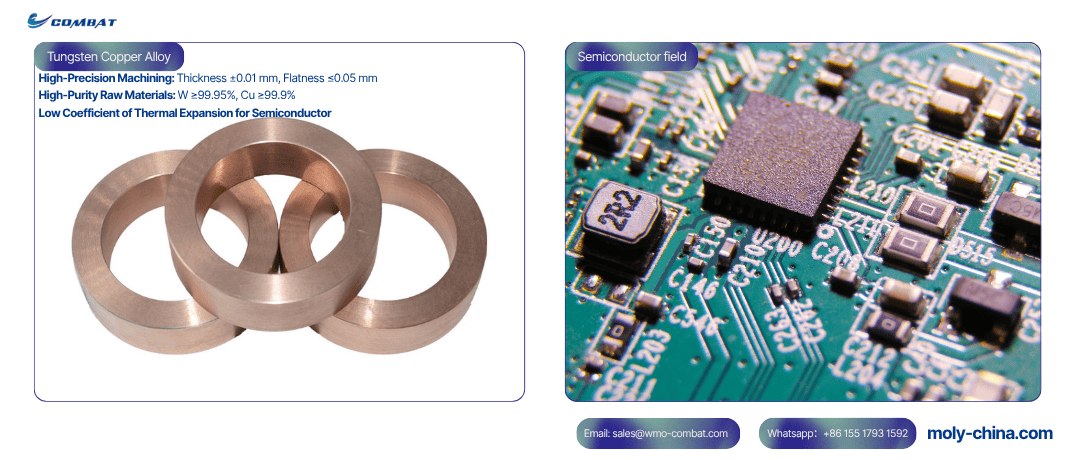
Global Advantages in Tungsten Material Production: China’s Central Role
As a global leader in tungsten-copper alloy material production, China has a complete production process and technology system, which can produce high-precision, high-value-for-money tungsten-copper alloy products for electronics.
According to statistics, the current market size of China's Wcu composite materials is about 1 billion yuan/year, and the global market size is about 2 billion yuan/year. The tungsten market has huge potential.
Luoyang Combat Tungsten-Molybdenum Materials Co., Ltd. is a joint-stock enterprise with a registered capital of RMB 100 million. The company specializes in the production and export of non-ferrous metal materials such as tungsten, molybdenum, titanium, tantalum, niobium and their alloy products, and has been actively involved in the tungsten-copper alloy market.
Tungsten-copper alloy empowers the future of electronics manufacturing: Market outlook
According to industry forecasts, the global tungsten-copper alloy market composite growth rate (CAGR) will reach 5.57% from 2026 to 2035, among which the demand share in the electronics field will increase year by year. Combat is committed to promoting continuous innovation in Wcu alloy technology and providing better material support for the global high-end electronics manufacturing industry.
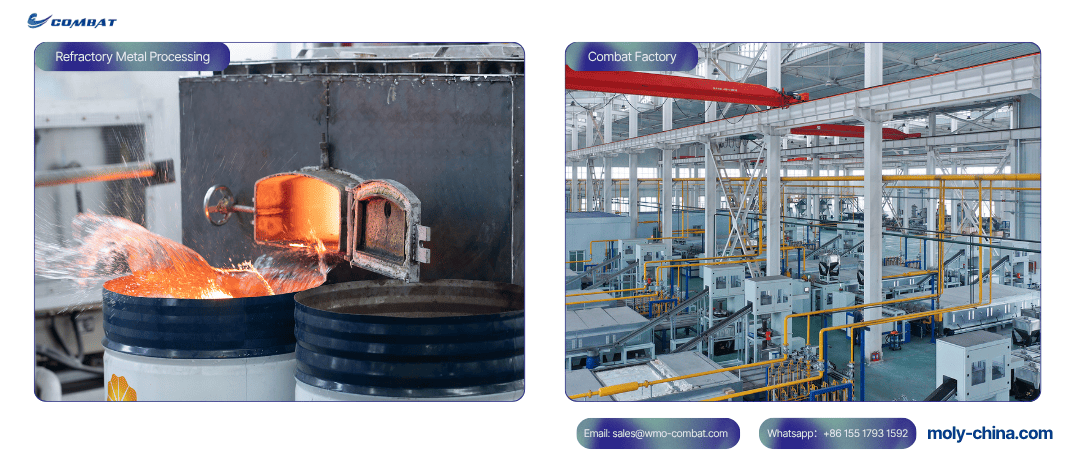
Professional Tungsten Copper Alloy Material Manufacturer: Combat
If you are an electronics manufacturer, buyer, and material manufacturer of high-end electronic components, you may want to pay attention to the application value of Wcu alloy. Whether it is EDM processing, electronic packaging, or high-voltage switch manufacturing, tungsten-copper alloy can help you improve product competitiveness and reduce maintenance costs with its excellent performance.
Welcome to consult professional tungsten-copper alloy manufacturers to obtain customized tungsten-copper alloy solutions and official quotes, and work together to empower the upgrading of the high-end electronics manufacturing industry.
Frequently Asked Questions About Tungsten-Copper Alloys
Q: What are the advantages of tungsten-copper alloys compared to other materials (such as molybdenum-copper and silver-copper alloys)?
A: Tungsten-copper alloys offer significantly better value than silver-copper alloys (costing only about one-third as much as silver-copper alloys).
Additionally, Wcu alloys exhibit 2.3 times greater resistance to arc erosion than molybdenum-copper alloys.
Q: Can tungsten-copper alloys be customized for specific electronic applications?
A: Yes. Customized tungsten-copper alloys meet the unique requirements of various electronic components. Contact a professional Wcu alloy manufacturer to adjust the tungsten-to-copper ratio and produce custom-shaped, precision structural components that meet the installation and usage requirements of complex electronic components.
Q: How can I procure high-quality tungsten-copper alloys for electronic applications?
A: To procure high-quality tungsten-copper alloys for electronic applications, first contact a professional tungsten-copper alloys manufacturer, provide specific application requirements (such as application scenarios, performance parameters, and dimensional specifications), and consult with their experts.