

What is Tungsten Crucible? Uses and Manufacturing Process
作者:kangbote 时间:2026-05-06 17:17:55
Tungsten crucible is an indispensable core component in semiconductor, crystal growth, high temperature smelting and other high-end fields, supporting the technology iteration and development of many high-end industries. In this article, tungsten crucible products will be comprehensively analyzed.
What is Tungsten Crucible?
Basic definition of tungsten crucible
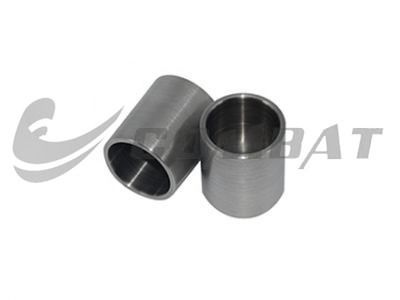
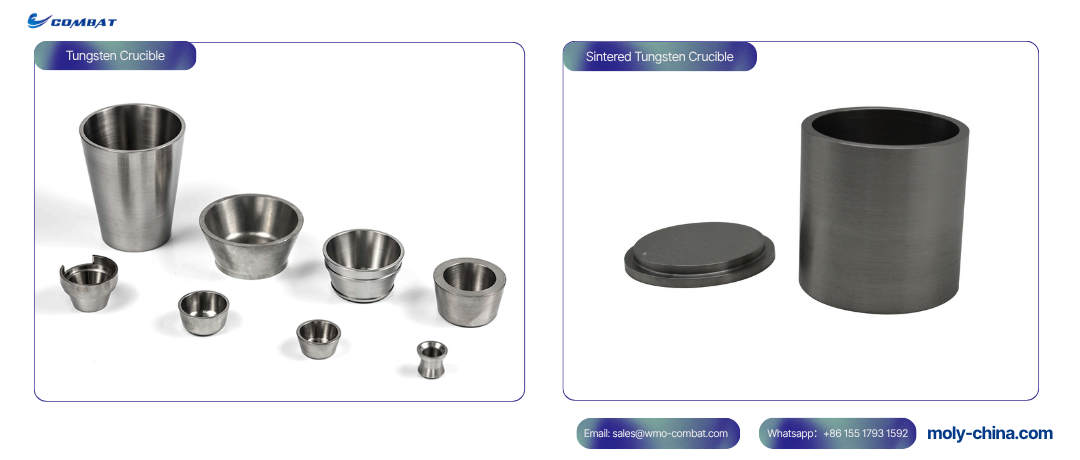
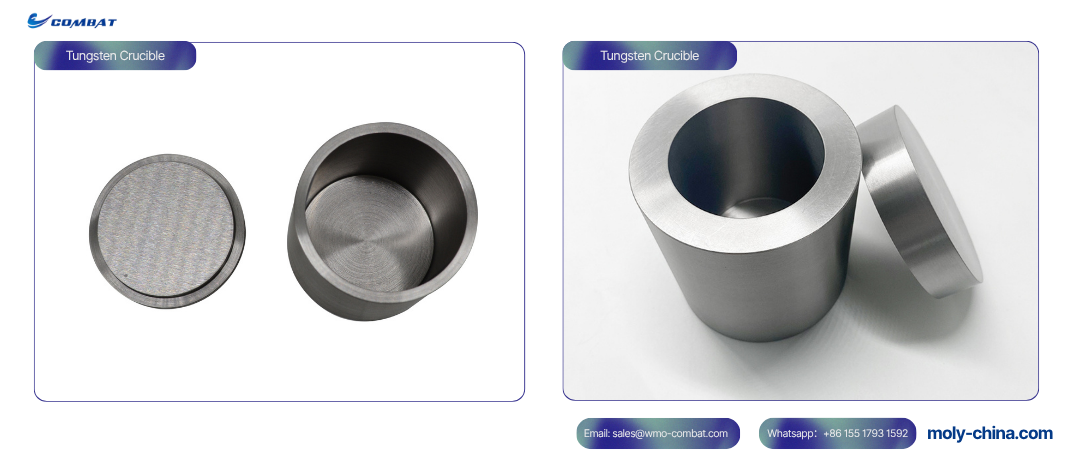
Tungsten crucible is a kind of high-temperature refractory container made of high-purity tungsten as raw material, the shape of which is deep-bottomed bowl, and the core purpose is to heat and melt solid or molten materials at high temperature. Compared with common glassware, tungsten crucible has the advantage of extremely high temperature resistance, which can completely solve the problem that common containers are easy to soften and melt at high temperature.
Core properties of tungsten crucible
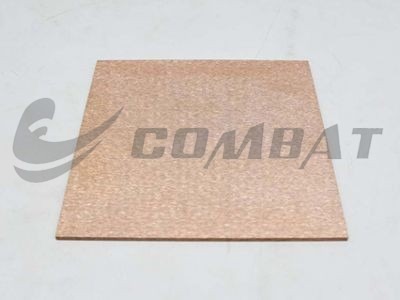
Tungsten crucible is one kind of tungsten products, and the core material is pure tungsten plate, tungsten sheet and pure tungsten rod.
Tungsten crucibles are suitable for vacuum or inert gas atmosphere, and can stably withstand high temperatures up to 2600℃, which is far beyond the limit of most metals. Common tungsten crucibles usually contain more than 99.95% tungsten, which can meet the purity requirements of most high-end scenarios; the shape is mainly cylindrical, with diameters ranging from 10mm to 500mm, heights ranging from 10mm to 750mm, wall thicknesses ranging from 8mm to 20mm, and the specifications can be flexibly adjusted according to the actual scenarios.
Core difference between tungsten crucible and other crucibles
Tungsten crucible vs. molybdenum crucible
The melting point of tungsten crucible (3422℃) is much higher than that of molybdenum crucible (2610℃), and the density (19.3g/cm³) is also higher, with better high temperature resistance and structural stability, but with the same specifications, the weight is bigger and the cost is slightly higher.
Tungsten crucible vs. graphite crucible
Graphite crucible has lower cost and good thermal conductivity, but it is easy to oxidize under high temperature, and the purity is difficult to meet the high-end demand, so it is more suitable for ordinary high temperature melting.
Tungsten crucible vs. quartz crucible
Tungsten crucible can withstand 2600℃ extreme high temperature, suitable for higher temperature melting scenario.
The melting point of quartz crucible is only 2713℃, it can't withstand ultra-high temperature, and it is easy to be damaged by mechanical impact, suitable for low and medium temperature, no violent impact scenarios.
Core features and advantages of tungsten crucible
The core reason why tungsten crucible can become the first choice for high-end ultra-high temperature field is due to its unique physical and chemical properties, which make it still maintain stable performance under extreme environment and meet various kinds of severe use requirements.
Extremely high melting point
The melting point of tungsten is as high as 3422℃, which is one of the metals with the highest melting point in nature, giving the tungsten crucible a strong ability to withstand high temperatures. Tungsten crucibles can be used for a long period of time even under vacuum and inert gas at 2600℃.
High Density
The density of tungsten crucible is up to 19.3g/cm³, much higher than other refractory metals such as molybdenum, which gives it excellent structural stability and mechanical strength, and it is not easy to be broken under high temperature, mechanical shock and other complex working conditions, and it can be operated stably for a long time and reduce the replacement cost.
Excellent thermal conductivity
The thermal conductivity of tungsten crucible is about 173W/m-K, which is better than that of molybdenum crucible and other similar products. The good thermal conductivity allows the temperature inside the crucible to be uniformly distributed and reduces the difference of thermal gradient.
This can effectively avoid problems such as local overheating and crystallization defects due to uneven heating of materials, which is especially suitable for crystal growth, precision melting and other scenarios that require very high temperature uniformity.
Excellent chemical compatibility
Under vacuum or inert gas environment, tungsten crucible has strong chemical inertness, can effectively resist the corrosion of molybdenum, niobium, tantalum and most other molten metals, and does not react with the material chemically to avoid contaminating the material. Tungsten is easy to oxidize in the air environment above 400℃, it is strictly prohibited to use in this environment for a long time, and good atmosphere protection is required.
Low vapor pressure
The vapor pressure of tungsten is extremely low, and almost no evaporation occurs under high temperature, which is crucial for the application of vacuum scenarios. In vacuum melting, vacuum evaporation and other processes, tungsten crucible will not produce impurities due to high temperature evaporation, which not only avoids its own loss and prolongs its service life, but also ensures the purity of materials and process stability, which makes it the first choice of ultra-high-temperature containers in vacuum environment.
High purity and cleanliness
The purity of tungsten crucible can reach more than 99.95%, and the extremely low impurity content can ensure that the material is not contaminated during the use. High-end fields such as semiconductors and electronic materials require extremely high material purity.
Enhanced product competitiveness
Tungsten crucible also has the advantages of low thermal expansion coefficient (only 4.5×10-⁶/K), high mechanical strength, etc. It is not easy to be deformed and cracked under high temperature due to thermal expansion and contraction, which guarantees the stability of long-term use. Adding an appropriate amount of rare earth elements to pure tungsten raw material can further improve its oxidation resistance, prolong its service life and adapt to more complex scenes.
Specifications of Tungsten Crucible Products from COMBAT
|
Parameter |
Details |
|
Base Material |
Pure Tungsten (W) |
|
Minimum Purity |
99.95% |
|
Density |
≥19.3 g/cm³ |
|
Max Operating Temperature |
3000°C |
|
Wall Thickness Range |
0.5-12mm (fully customizable) |
|
Diameter Options |
8-250mm (standard & customizd size) |
|
Surface Treatment |
Polished, Sandblasted (optional) |
Manufacturing process of tungsten crucible
The manufacturing process of tungsten crucible directly determines its performance, precision and service life. As a leading manufacturer of tungsten crucible in China, COMBAT has the following manufacturing process for tungsten crucible.
Spinning process
Spinning process is mainly applied to the production of small and medium-sized crucibles, and the core process is divided into three steps: hot rolling the tungsten billet to make uniform tungsten sheet; mechanical spinning molding by special equipment at 1000℃ to control the shape and size accurately; and annealing to improve the plasticity, to avoid cracks after molding, and to enhance the toughness.
Stamping Process
Stamping process is a cost-effective manufacturing method for mass production of small and standardized tungsten crucibles, and the core process includes three steps, namely: drop the tungsten sheet according to the design size to get the blank; bend the blank to form the initial crucible outline; and make the hollow crucible prototype through deep-drawn stamping, which can be molded without complicated subsequent processing.
Forging process
The forging process is used to produce high-performance, high-density tungsten crucibles. The process is complex and requires high parameter control: the tungsten rod is heated to 1400-1600°C to keep it in a plasticized state. Repeated forging and annealing treatment remove the internal stress and improve the density; finally, the crucible is made with density close to the theoretical value, which ensures excellent strength and stability.
Sintering process
Sintering process is the most core and widely used manufacturing process, which can be adapted to the production of crucibles of various sizes, and the core process is divided into two steps of pre-processing and sintering: the pre-processing includes the selection of tungsten powder of 1.0~5.0um dosage and mixing, pressing under 200MPa pressure (holding pressure for 7 minutes), and isostatic pressing to ensure the uniformity of billet; then the billet is put into the induction furnace, and sintered under the high temperature of 2200-2400℃ for about 7 hours to form the structural integrity and stability of the crucible. It takes about 7 hours to form tungsten crucible with complete structure and high density.
Quality control in manufacturing process
The production of high quality tungsten crucible is inseparable from the whole process of quality control, and each process requires strict testing at COMBAT Tungsten Manufacturer. Tungsten purity test to ensure that the tungsten content meets the standard; density test to ensure the stability of the structure, and dimensional accuracy test to ensure that it is suitable for the actual scene.
Core application of tungsten crucible
With the core advantages of high temperature resistance, high purity and chemical stability, tungsten crucibles are widely used in many high-end fields such as crystal growth, metal melting, high-temperature furnace operation, semiconductor and so on, and have become the core components to promote the development of related industries.
High-temperature furnace field
Tungsten crucible is the core container in high-temperature furnaces, mainly used in crystal growth, metal casting, refractory production and other scenarios, in which the temperature in high-temperature furnaces is usually as high as more than 1,000℃, which is not bearable by ordinary containers.
Semiconductor industry
Tungsten crucible is used in the production of semiconductor components in the semiconductor industry, where the purity of materials is extremely high and a hint of impurity may lead to the scrapping of chips. Tungsten crucibles are high purity, non-polluting and chemically stable. In the CZ (straight pulling) and FZ (zone melting) methods of monocrystalline silicon growth, tungsten crucibles are used to carry molten silicon, and their high purity avoids impurity contamination. With the expansion of N-type wafer production capacity, the demand for large-size tungsten crucibles is increasing.
Vacuum and Thermal Evaporation
Tungsten crucible is the core component of vacuum evaporation and thermal evaporation process, which is mainly used for thin film preparation in the fields of optical coating and electronic devices. The low vapor pressure of tungsten crucible can avoid the impurities generated by its own evaporation in the process of high temperature vaporization, and its extremely high melting point can stably withstand the high temperature required for material vaporization, accurately controlling the process of heating and vaporization, and assisting in the preparation of high-quality thin films.
Refractory metal melting and casting
Refractory metals such as molybdenum, niobium, tantalum and so on have extremely high melting points, and ordinary containers are unable to withstand their melting temperatures, so tungsten crucibles become the ideal containers for melting and casting of these metals due to their high melting points of 3422℃.
Chemical Processing and Scientific Research
Some chemical research and processing scenes need to be carried out under high temperature and strong corrosive environment, which requires strict requirements on chemical stability and high temperature resistance of containers, tungsten crucible becomes the first choice for such scenes due to its excellent chemical compatibility and high temperature resistance.
Crystal growth field
In addition to monocrystalline silicon, tungsten crucibles are also widely used in the growth process of high-quality crystals such as sapphire and YAG laser crystals. As crystal growth requires high temperature uniformity and container cleanliness, tungsten crucible's excellent thermal conductivity ensures temperature uniformity, and its high purity prevents impurities from affecting crystal quality, providing a stable environment for crystal growth and helping to cultivate high-quality crystals, which are used in high-end fields such as lasers, optics, and electronics.
Powder metallurgy field
In powder metallurgy process, tungsten crucible is used for sintering and cementing metal powder, ceramics and other materials, its high temperature resistance can withstand the high temperature required for powder sintering, structural stability can ensure that the container will not be deformed in the process of sintering, and high cleanliness can avoid contaminants to ensure the quality of the final product, which is widely used in the powder metallurgy processing of metals, ceramics and other materials.
How to choose the right tungsten crucible?
Choosing the right tungsten crucible directly affects the process stability, product quality and cost, so you need to combine your own use scenario, process requirements, and comprehensively consider a number of core factors to avoid the loss caused by improper selection.
Selection of tungsten crucible size
First of all, calculate the required volume according to the total charge, crystal growth, melting and casting scenes need to be combined with 60%-90% of the finished product rate inverse, and reserve space for reaction or melt expansion; secondly, tungsten crucible outer diameter needs to be smaller than the inner diameter of the furnace chamber or heater, leaving a safety gap of 10-50mm.
Tungsten crucible shape selection
The shape of the tungsten crucible should be selected according to the geometry of the substrate, the heating method and the process requirements: cylindrical tungsten crucibles are universal shapes, straight or slightly conical tungsten crucibles are suitable for crystal pulling growth, and customized shapes are available for special requirements.
Tungsten crucible wall thickness selection
The wall thickness needs to take into account both durability and thermal response: thick-walled tungsten crucibles have high mechanical strength, good durability, and long service life, but high thermal mass and slow heating and cooling speed. Thin-walled tungsten crucibles have low thermal mass, fast heating and cooling, energy savings and low thermal stress, but weak durability and short life.
Other Key Selection Factors
Purity level: semiconductor, electronic materials and other high-end fields need to choose 99.95% or more purity, general industrial scenarios can choose conventional purity.
Manufacturing process: select stamping process for mass production and small standardized products, select spinning process for small and medium batch with high precision requirement, select forging process for high-performance and small-size scenarios, and select sintering process for general-purpose scenarios.
Chemical compatibility: It is necessary to confirm that the crucible is compatible with the material and process atmosphere to avoid chemical reaction contaminating the material.
Maintenance and prevention of tungsten crucible
When using tungsten crucible, you need to strictly control the temperature and atmosphere, avoid the long-term use of air environment above 400℃, and do a good job of vacuum or inert gas protection. After using tungsten crucible, let it cool down to room temperature naturally to avoid rapid cooling and cracking; after cooling, use special tools to clean and remove the residual material on the inner wall, avoid scraping.
FAQ of Tungsten Crucible
In the selection, use and procurement process of tungsten crucible, industry practitioners often have some questions, the following detailed answers to common problems to help quickly solve the confusion.
What is the pricing advantage of high purity tungsten crucible?
Our high purity tungsten crucible pricing is transparent and reasonable with no hidden cost. Under the premise of guaranteeing tungsten content ≥99.95% (high-end products can be up to 99.99%), we optimize the process and control the cost of tungsten crucible by large-scale production, and supply competitively priced tungsten crucible.
What is the core difference between tungsten crucible and molybdenum crucible?
The core difference between the two is focused on high temperature resistance, density and cost: tungsten crucible with melting point 3422℃ and density 19.3g/cm³ has better high temperature resistance and stability, but the cost is slightly higher; molybdenum crucible with melting point 2610℃ and density about 10.2g/cm³ is suitable for medium and high temperature, weight requirement and limited budget. The tungsten crucible is preferred for ultra-high temperature (>2600℃) and high purity scenarios.
How to extend the service life of tungsten crucible?
To extend the service life, we need to do three things: firstly, correct selection, make sure the parameters are suitable for the scene; secondly, standardize the use, control the environment and temperature speed, avoid the use of high-temperature air environment; thirdly, scientific maintenance, clean and check before and after the use, and store properly.
Can tungsten crucible be used in air environment with high temperature?
No. Tungsten is easy to oxidize in the air environment above 400℃, which will lead to surface damage, shorten the life of the crucible and even contaminate the material. If it is necessary to use it at high temperature, it must be well protected by vacuum or inert gas, and it is forbidden to use it for a long time in the air environment above 400℃.
Conclusion
Tungsten crucible is the core container in the field of ultra-high temperature and high purity, and it is also an indispensable component in the field of high-end industry and scientific research. If you have tungsten crucible selection, customization, procurement and other related needs, please feel free to consult COMBAT, we will combine your specific scenario and provide professional solutions.