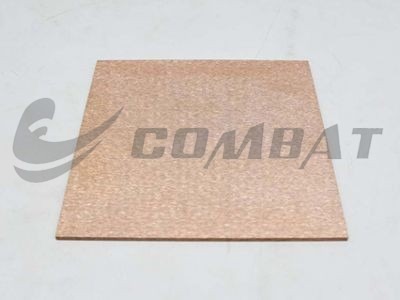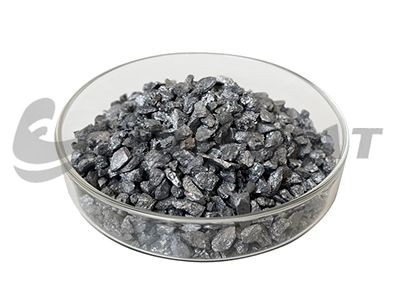


How to Select Tungsten Heavy Alloy Radiation Shielding
作者:kangbote 时间:2026-10-13 17:08:09
Selecting tungsten heavy alloy radiation shielding requires more than comparing tungsten content or density. The correct material must match the radiation type and energy, required attenuation, available space, component geometry, mechanical conditions, and verification requirements.
This guide explains how engineers and procurement teams can evaluate tungsten radiation shielding as a complete component rather than purchasing material based on tungsten content alone.
What Is Tungsten Heavy Alloy Radiation Shielding?
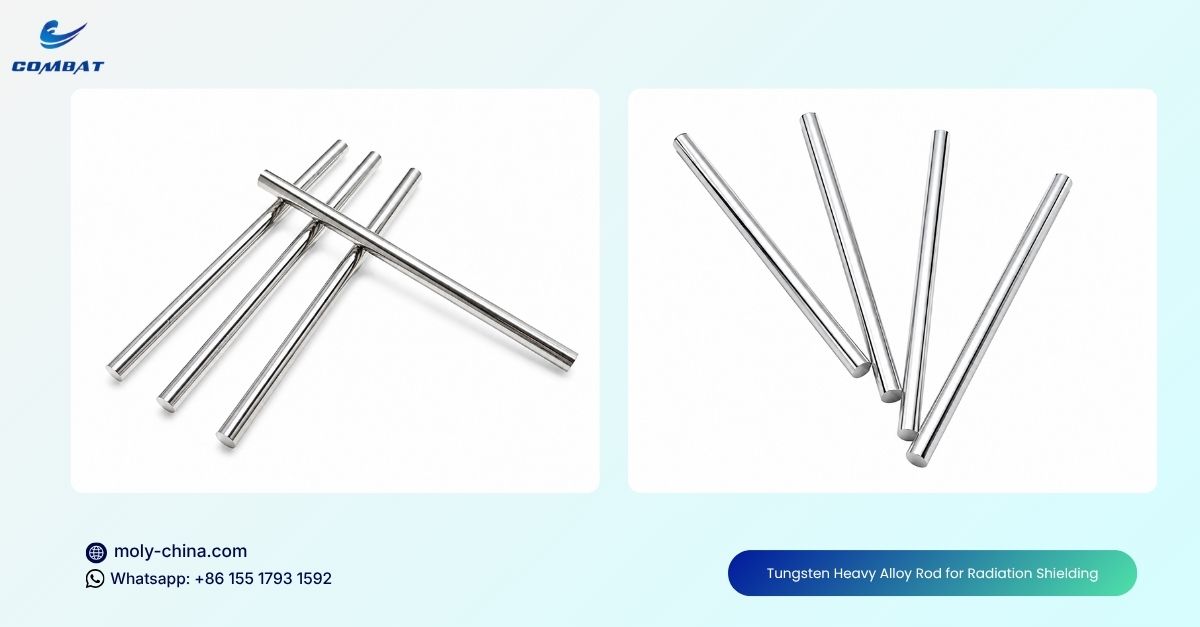
Tungsten heavy alloy radiation shielding is a dense, machinable metal system used primarily to reduce exposure to X-rays and gamma rays. It normally contains a high percentage of tungsten combined with a nickel-iron or nickel-copper binder.
The tungsten phase provides high density and photon attenuation. The metallic binder improves toughness and machinability compared with pure tungsten.
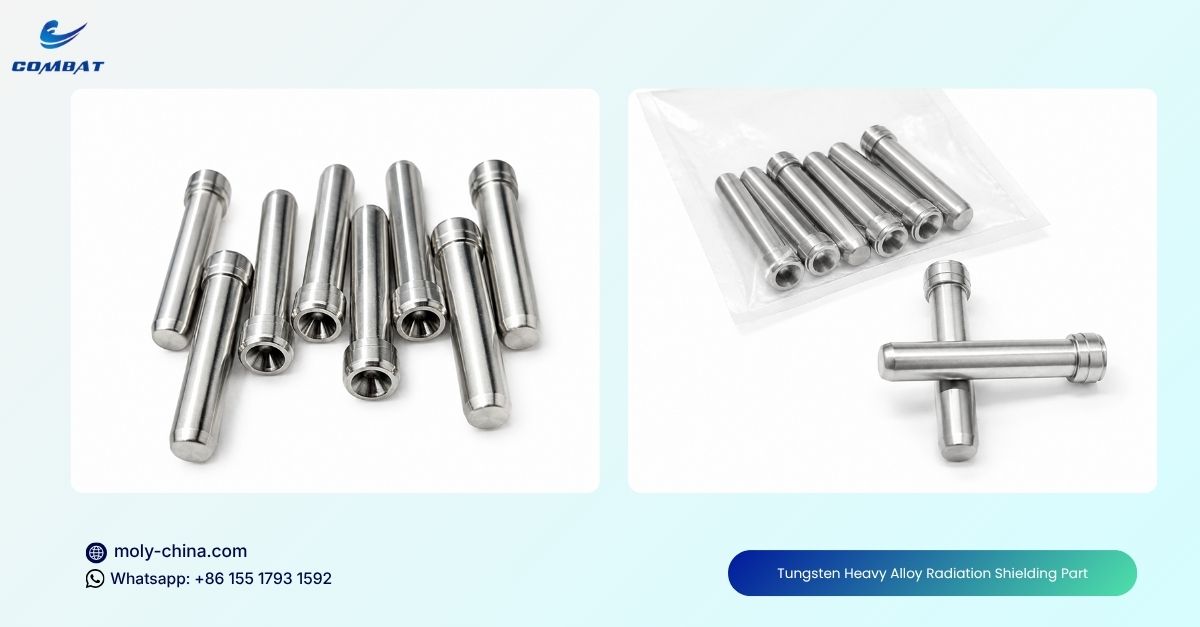
Common forms of tungsten alloy radiation shielding include:
- Collimators
- Source containers
- Syringe shields
- Detector housings
- Apertures and beam-shaping components
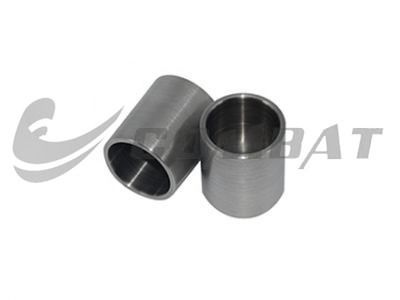
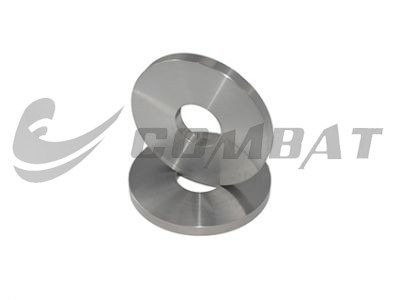
- Shielding sleeves and rings
- Industrial inspection components
- Custom shielding blocks and inserts
Commercial tungsten heavy alloys commonly have densities between approximately 16.5 and 18.5 g/cm³. The exact value depends on the tungsten content, binder composition, manufacturing route, and applicable material specification.
Why Use Tungsten for X-Ray and Gamma-Ray Shielding?
Tungsten radiation shielding is particularly useful when a design requires substantial photon attenuation within a compact space.
High density reduces the required volume
A denser radiation shielding material can often achieve a target attenuation with less thickness than a lower-density alternative. This makes tungsten shielding for X-rays attractive in compact medical, inspection, and analytical equipment.
The same advantage applies to tungsten gamma ray shielding. However, the required thickness still depends on gamma energy, source geometry, allowable transmission, and surrounding structures.
Tungsten heavy alloy can serve as a structural component
Lead is soft and normally requires structural support or encapsulation. A tungsten heavy alloy shield can often be machined into a load-bearing or dimensionally stable component.
This allows one part to perform several functions:
- Provide radiation attenuation
- Maintain a precise aperture
- Support another component
- Protect a detector or radiation source
- Provide mounting and assembly features
Tungsten avoids several lead-related constraints
Tungsten heavy alloy does not create the same lead-contamination concerns as exposed lead. It also provides better resistance to deformation during repeated handling.
This does not mean every tungsten alloy is free from handling requirements. Nickel-containing materials, coatings, coolants, and machining dust still require suitable industrial hygiene controls.
How to Select Tungsten Heavy Alloy Radiation Shielding
A reliable selection process follows seven connected steps.
1. Identify the radiation type
Determine whether the shield will encounter:
- Diagnostic or industrial X-rays
- Low-, medium-, or high-energy gamma rays
- Bremsstrahlung
- Neutrons
- A mixed neutron-gamma field
Tungsten is primarily a photon-shielding material. It should not be treated as a complete neutron shield.
Neutron applications frequently require hydrogen-rich materials to slow neutrons and neutron-absorbing materials to capture them. Tungsten may still form part of a layered system that controls secondary or accompanying gamma radiation.
2. Define the energy spectrum
Do not specify only the source name. Record the relevant photon energies or operating spectrum.
Photon attenuation changes with energy, so shielding developed for one X-ray tube voltage or isotope cannot automatically be transferred to another application.
Where several energies are present, the shielding calculation should evaluate the full spectrum or use a justified conservative condition.
3. Establish the attenuation target
Define the allowable transmitted dose rate, exposure rate, or percentage transmission at a stated location.
Examples include:
- Maximum dose rate at an operator position
- Maximum leakage at the equipment enclosure
- Required reduction across a source container wall
- Detector isolation from unwanted radiation
- Occupational or public-area design limits
Avoid vague requirements such as “maximum shielding” or “complete protection.” They do not give the designer or tungsten radiation shielding supplier a measurable acceptance criterion.
4. Confirm the available space
Record the maximum permitted dimensions, installation envelope, clearance, and weight.
Limited space may favor a higher-density grade. Where space is less restricted, a slightly lower-density alloy may offer better machinability, ductility, cost, or availability.
5. Select the alloy system and density
Choose between W-Ni-Fe, W-Ni-Cu, pure tungsten, or another engineered tungsten shielding material. Base this decision on more than nominal density.
Review:
- Certified density
- Tungsten content
- Mechanical strength
- Elongation
- Magnetic response
- Corrosion behavior
- Machinability
- Operating temperature
- Available blank size
6. Design the complete shielding geometry
Calculate the required tungsten shielding thickness, then review every joint, hole, opening, corner, and interface.
A local gap can control actual radiation leakage even when most of the component is considerably thicker than required.
7. Define verification before requesting quotations
Specify the evidence needed to accept the material and the finished part. This may include material certification, dimensional inspection, density testing, nondestructive examination, magnetic-property testing, or a completed radiation survey.
How to Choose the Correct Tungsten Alloy Grade
The best tungsten alloy for radiation shielding is the lowest-risk grade that satisfies the attenuation, mechanical, environmental, and manufacturing requirements.
Selecting the highest available tungsten content is not always the best decision. Higher density may reduce thickness, but the resulting material can present different machining, ductility, or supply constraints.
ASTM B777 tungsten heavy alloy classes
ASTM B777 covers four classes of machinable high-density tungsten-base metal. These classes provide a useful basis for specifying composition, density, and mechanical properties.
A complete tungsten heavy alloy purchase requirement should identify:
- Applicable standard and edition
- Tungsten alloy material class
- Alloy or binder system
- Required condition
- Minimum acceptable density
- Mechanical properties when relevant
- Additional application-specific tests
ASTM B777 tungsten heavy alloy material compliance does not by itself certify radiation performance. Finished shielding effectiveness still depends on composition, thickness, geometry, assembly, and radiation conditions.
W-Ni-Fe vs W-Ni-Cu Radiation Shielding
W-Ni-Fe and W-Ni-Cu are the two most common tungsten heavy alloy systems considered for radiation shielding.
|
Selection factor |
W-Ni-Fe alloy |
W-Ni-Cu alloy |
|
General photon shielding |
Commonly selected |
Commonly selected |
|
Mechanical strength |
Often favorable |
Grade-dependent |
|
Machinability |
Generally suitable |
Grade-dependent |
|
Magnetic response |
Can be significant |
Usually lower |
|
Complex structural parts |
Frequently used |
Requires grade review |
|
Magnetically sensitive environments |
Verify carefully |
Often preferred, but must be tested |
|
Availability |
Often broader |
May require longer sourcing |
When W-Ni-Fe is appropriate
W-Ni-Fe is commonly selected for general tungsten heavy alloy shielding, collimators, source containers, blocks, and structurally loaded components.
Its nickel-iron binder may create a measurable magnetic response. This must be evaluated near magnetic instruments, sensors, and other sensitive equipment.
When W-Ni-Cu is appropriate
W-Ni-Cu may be preferable when reduced magnetic response is important. It is often described as a nonmagnetic tungsten alloy for radiation shielding, but the finished part should still be tested against a quantitative magnetic requirement.
Do not rely on the word “nonmagnetic” alone. Specify the property, limit, test method, and acceptance condition required by the application.
How to Perform a Tungsten Shielding Thickness Calculation
A preliminary tungsten shielding thickness calculation begins with the relationship between incident radiation and transmitted radiation.
For a narrow monoenergetic photon beam:
T = e^(-μx)
Where:
- Tis the transmitted fraction
- μis the linear attenuation coefficient
- xis the material thickness
Rearranging the equation gives:
x = ln(1/T) / μ
The attenuation coefficient depends on photon energy, alloy composition, and density. Use validated attenuation data that represents the specified tungsten alloy rather than assuming pure tungsten and a tungsten heavy alloy behave identically.
Using half-value layers
A half-value layer is the thickness that reduces photon intensity by half under defined conditions.
|
Required reduction |
Remaining transmission |
Ideal half-value layers |
|
50% |
50% |
1.00 |
|
90% |
10% |
3.32 |
|
99% |
1% |
6.64 |
|
99.9% |
0.1% |
9.97 |
For example, a requirement for 99% reduction corresponds to approximately 6.64 half-value layers. The physical thickness cannot be determined until the appropriate half-value layer for the alloy and photon energy has been established.
Why the simple calculation is not enough
The exponential equation represents an idealized condition. Actual tungsten alloy radiation shielding can also be affected by:
- Scattered radiation
- Radiation buildup
- Broad-beam geometry
- Source size
- Beam divergence
- Multiple photon energies
- Air gaps
- Internal voids
- Adjacent structures
- Detector response
- Openings and assembly joints
Use the simple equation for preliminary comparison. Final shielding approval should rely on a validated engineering model, recognized calculation method, or physical radiation test appropriate to the application.
Design and Machine Custom Tungsten Radiation Shielding Parts
Custom tungsten radiation shielding parts must be designed for both attenuation and manufacturability.
Eliminate radiation streaming paths
Radiation can travel through narrow gaps and openings that bypass the intended shielding thickness.
Review:
- Straight assembly seams
- Fastener holes
- Cable openings
- Ventilation passages
- Detector windows
- Source-loading channels
- Door and cover interfaces
- Collimator apertures
- Where possible, use overlapping, stepped, or labyrinth-style interfaces instead of a direct gap through the shield.
Specify minimum wall thickness
A nominal wall thickness does not guarantee that every finished surface meets the shielding calculation.
Define:
- Minimum acceptable wall thickness
- Applicable dimensional tolerance
- Critical inspection locations
- Profile or concentricity requirements
- Treatment of internal corners and tapers
This is especially important for collimators, sleeves, thin septa, deep bores, and irregular shielding inserts.
Review part mass and structural loads
High-density tungsten alloy creates concentrated loads even when the component is compact.
The design team should evaluate:
- Total weight
- Center of gravity
- Mounting loads
- Hinge and bearing capacity
- Dynamic acceleration
- Shock and vibration
- Lifting provisions
- Operator handling
Complete a machining review
Deep holes, thin unsupported walls, fine threads, sharp internal corners, and very tight tolerances can increase machining risk and cost.
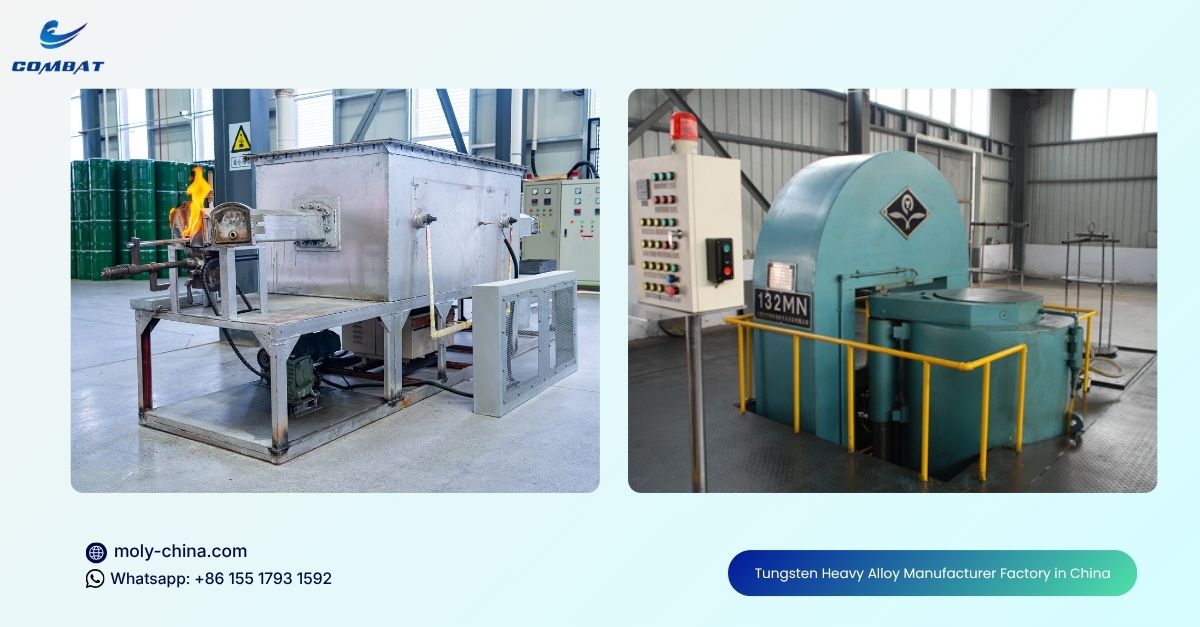
A manufacturing review should occur before the drawing is frozen. This allows the supplier to identify features that may require special tooling, electrical discharge machining, grinding, additional inspection, or a design adjustment.
Tungsten Radiation Shielding Applications
Tungsten shielding for medical equipment
Tungsten shielding for medical equipment may be used in collimators, detector housings, syringe shields, source containers, and beam-limiting assemblies.
The material specification must be coordinated with the complete equipment risk assessment and applicable regulatory requirements.
Nuclear medicine shielding
Nuclear medicine applications may use tungsten alloy components around radiopharmaceutical syringes, vials, isotope containers, and imaging equipment.
The design must account for the isotope energy, activity, operator distance, handling time, viewing requirements, and any openings needed for administration or measurement.
Industrial X-ray and gamma inspection
Industrial inspection systems use tungsten radiation shielding around X-ray tubes, gamma sources, detectors, collimators, and enclosure penetrations.
Durability and alignment can be as important as raw attenuation because repeated movement or impact may change an aperture or joint.
Scientific and analytical instruments
Compact detectors and analytical instruments may use custom tungsten radiation shielding parts to reduce background radiation, shape a beam, or isolate sensitive components.
These applications often require tight dimensional tolerances and careful control of material composition.
How to Evaluate a Tungsten Radiation Shielding Supplier
A qualified tungsten radiation shielding supplier should be able to connect the requested shielding requirement to material selection, manufacturability, inspection, and traceability.
Evaluate suppliers using objective evidence.
|
Requirement |
Evidence to request |
|
Material identity |
Certificate showing alloy, composition, lot, and applicable standard |
|
Density |
Lot-specific result with test method and acceptance range |
|
Mechanical properties |
Test report when the component carries structural loads |
|
Dimensions |
Inspection report tied to critical drawing characteristics |
|
Internal quality |
Suitable nondestructive examination when required |
|
Magnetic properties |
Measured result for magnetically sensitive applications |
|
Surface requirements |
Finish and coating records where applicable |
|
Traceability |
Link between raw material, production lot, and finished part |
|
First-article approval |
Complete dimensional and material verification |
|
Shielding performance |
Application-specific calculation or radiation test |
For bulk tungsten shielding orders, also review:
- Maximum sintered blank size
- Machining capacity
- Inspection equipment
- Annual production capacity
- Batch consistency
- Change-control procedures
- Packaging for dense precision parts
- Lead time for repeat orders
- Treatment of nonconforming material
A generic quality certificate does not prove that a tungsten heavy alloy supplier can consistently produce complex tungsten radiation shielding components.
Frequently Asked Questions About Tungsten Radiation Shielding
How much tungsten shielding is needed?
The required tungsten shielding thickness depends on photon energy, source strength, geometry, distance, allowable transmission, alloy composition, and density. A universal thickness cannot be specified without these inputs.
What is the best tungsten alloy for radiation shielding?
The best alloy is the grade that satisfies the verified attenuation requirement while also meeting mechanical, magnetic, environmental, machining, and cost constraints. The highest-density grade is not automatically the best choice.
Is tungsten suitable for both X-rays and gamma rays?
Yes. Tungsten shielding for X-rays and tungsten gamma ray shielding are established applications. The required thickness changes with the photon spectrum and cannot be transferred directly from one radiation source to another.
Can tungsten heavy alloy shield neutrons?
Tungsten may be one component of a mixed shielding system, but it is not normally a complete neutron shield. Neutron protection commonly requires moderating and absorbing materials selected through a dedicated analysis.
Is W-Ni-Cu always nonmagnetic?
W-Ni-Cu generally has a lower magnetic response than W-Ni-Fe, but buyers should not rely on an unqualified description. Specify and test an acceptable magnetic-property limit for the finished part.
Does ASTM B777 guarantee shielding performance?
No. ASTM B777 establishes material requirements for high-density tungsten-base metal. It does not validate finished shielding thickness, assembly joints, radiation leakage, or application-specific attenuation.
Conclusion
The correct way to select tungsten heavy alloy radiation shielding is to connect the radiation field, attenuation target, alloy grade, minimum thickness, geometry, manufacturing process, and acceptance evidence.
Need a tungsten heavy alloy shielding component for your application? Share your drawing, target dimensions, and material requirements with COMBAT to discuss a suitable manufacturing solution.